Hartford Drywall Pros

Commercial drywall in Hartford, worked around your opening hours

Night and weekend shifts booked in advance, a foreman who signs in at reception every morning, and dust barriers up before the first sheet is moved.

Fit outs, turnarounds and rated walls for Hartford contractors

You get the space handed back on the morning you were promised it, with the barriers down and the floor swept.

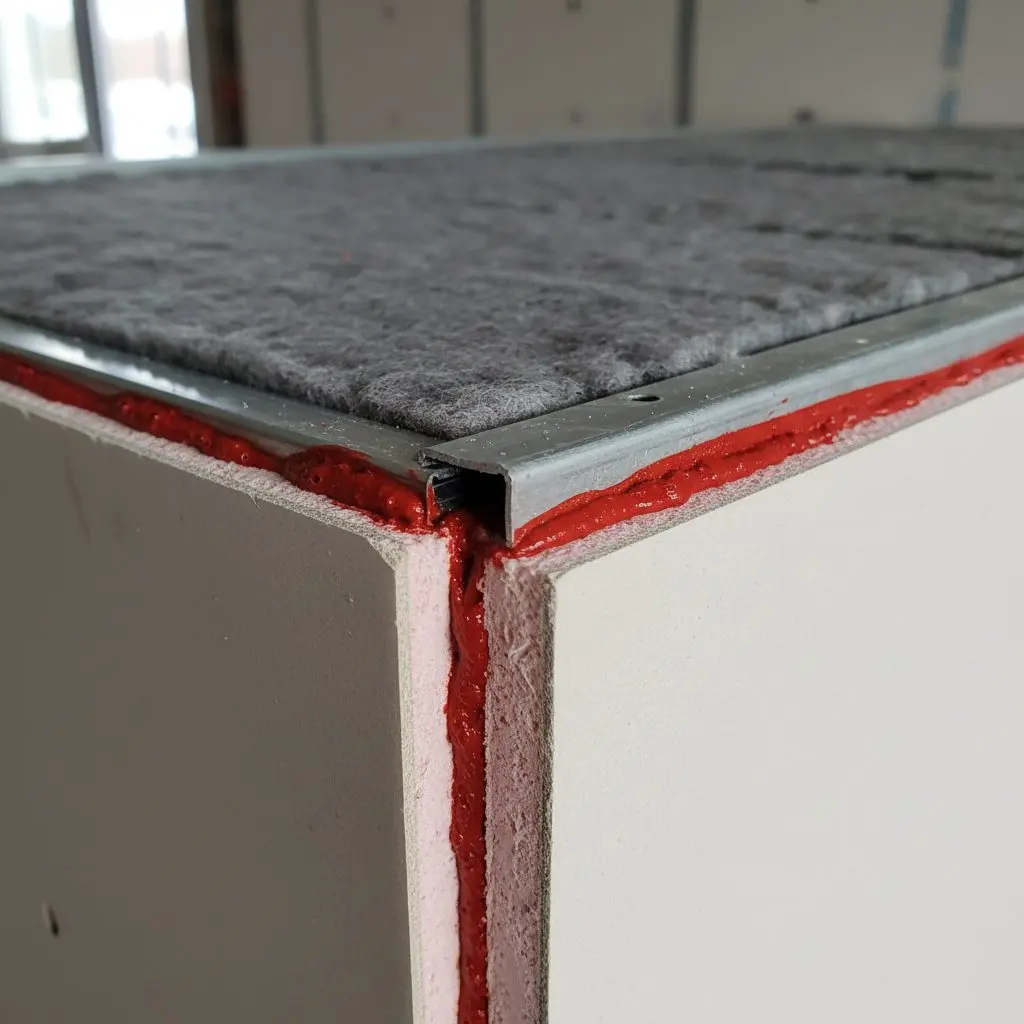
A firestopping detail at the head of a rated wall, the red sealant bead run along the track and the board edge

Hartford Drywall Pros is a drywall contractor in Hartford with four crews, working for general contractors, property managers and business owners since 2007. Commercial work is booked by the shift, and a date held four weeks out is a date we keep.

Office buildouts, retail units turned round between tenants, restaurant and medical build outs, corridors and common areas in apartment buildings, and rated assemblies where a wall separates one tenancy from the next. Rated work is built to the tested assembly rather than to a thickness, so the board, the fixing centers and the firestopping match the UL number on the drawing, because an inspector checks the assembly and not the intention behind it.

Is one corridor worth your time? A property manager with a single damaged common hallway to patch is a two day job we will take, and the largest last year was a thirty thousand square foot office buildout for a general contractor, hung floor by floor.

Send the drawings or call for a free take off at (860) 847-8709. You will stop building your schedule around a subcontractor who might not show and start giving your client a date you believe!

Certificates, take offs and shifts, not how much dust there is

The work is the same as a house. The paperwork, the hours and the sign off are not.

A homeowner wants to know how much dust there will be. You want to know whether the crew is on site at six, whether the certificate of insurance names your entity as additional insured, and whether the invoice will match the schedule of values you already sent your client. Those are different questions and this page is the answer to them. We take a scope off drawings rather than off a walk round, we come back inside a day of the take off with whether the date on your schedule is one we can hold, and where a job is phased each area is signed off before the next barrier goes up.

  • Night, weekend and early start shifts booked in advance
  • Certificate of insurance naming you as additional insured
  • Take offs and RFIs worked from drawings, not a walk round
  • Phased turnover, one area signed off at a time
  • Invoicing against your schedule of values, with lien waivers
  • Rated assemblies built to the UL number on the drawing
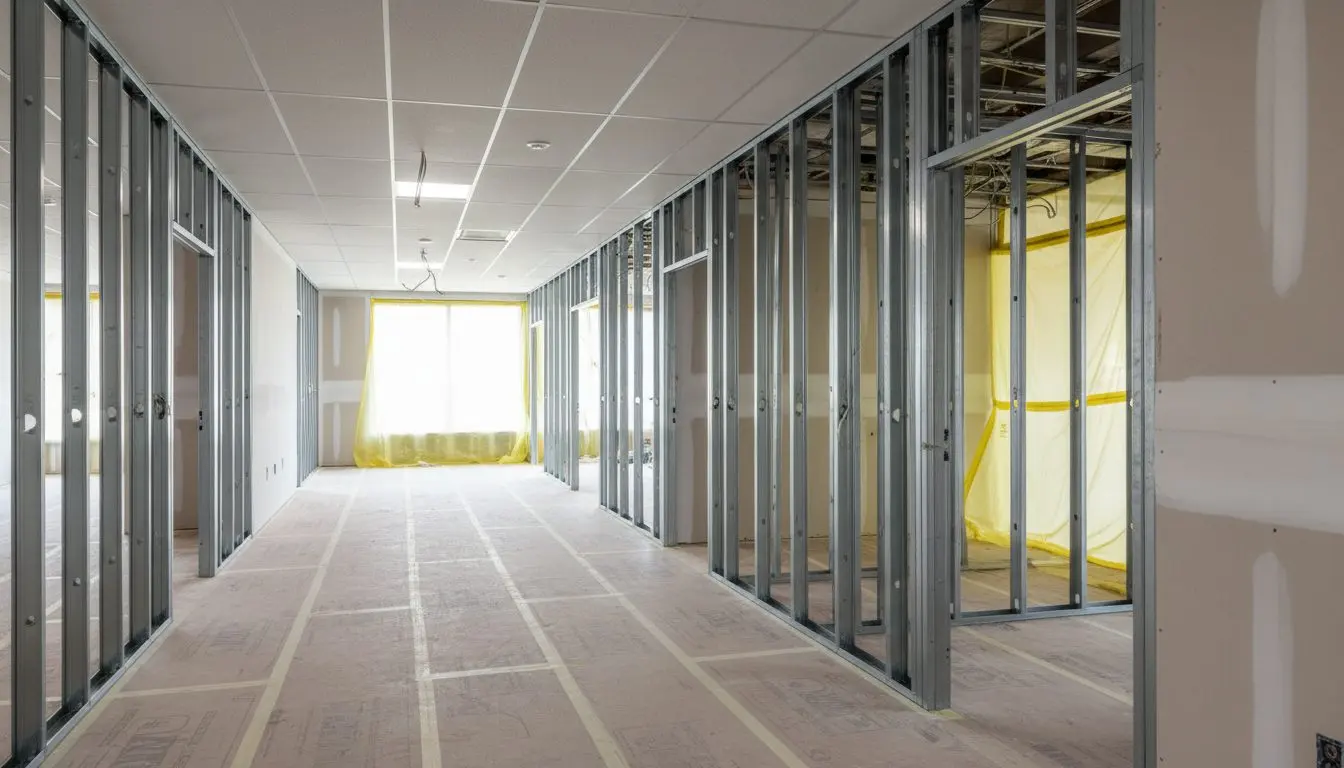
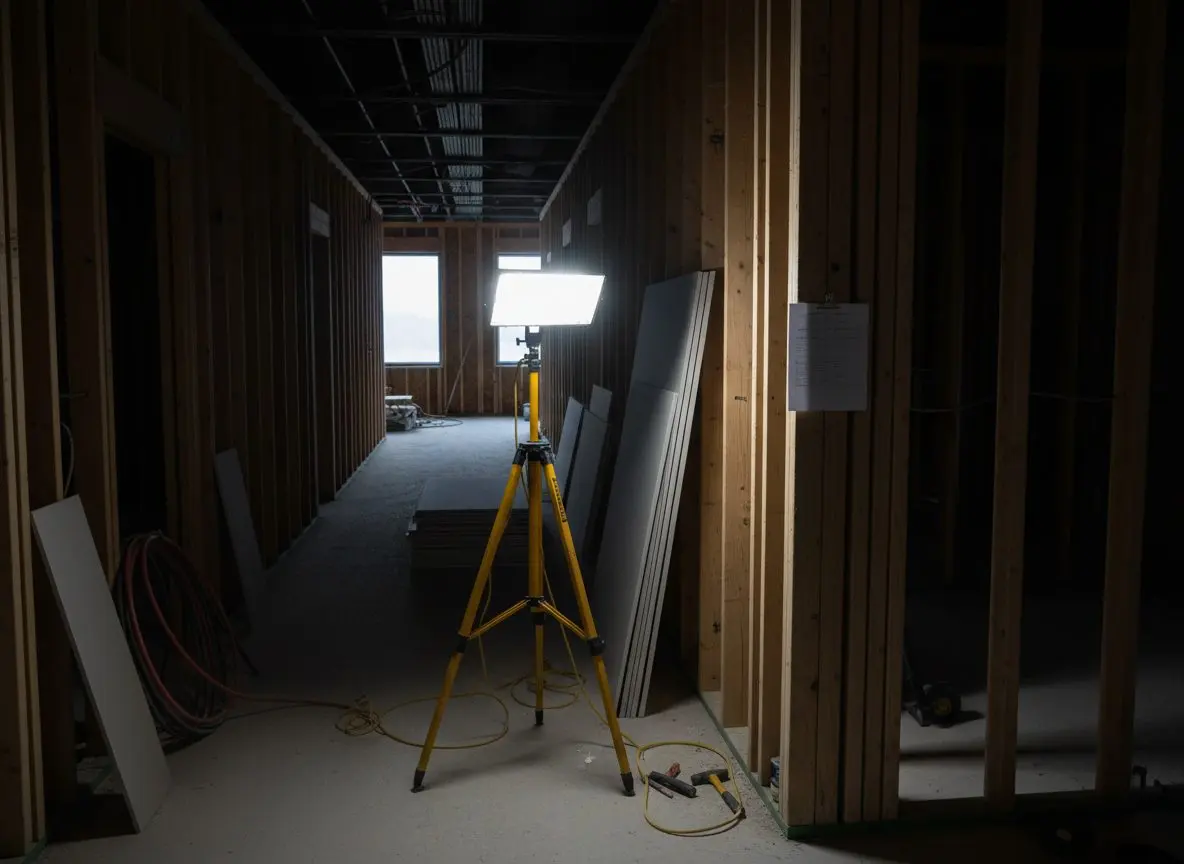
A commercial corridor mid board, a temporary work light rigged on a stand and a site sign in sheet clipped to a stud, the space beyond the work area still dark
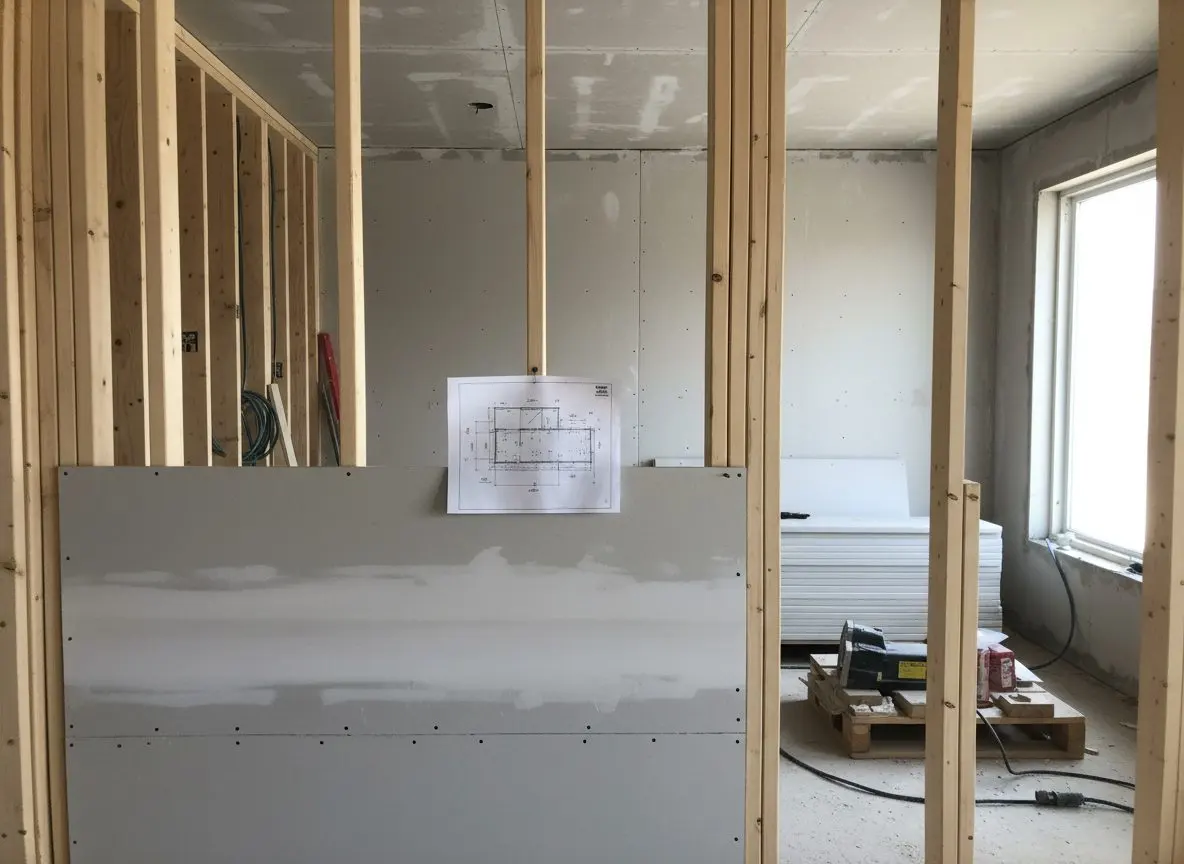
A stud partition part hung, a drawing pinned to the frame showing the fire rated assembly number, the joints on this run still untaped

Our commercial drywall services in Hartford

Commercial Residential
  • Drywall Installation

    For anybody standing in front of bare studs, whether that is an addition you have just had framed, a basement you are finally finishing, or a wall the electrician opened three weeks ago and left. People choose this over a general contractor's own crew because the framing gets straightened before the board is ordered, and that one step is what decides whether the finished wall looks flat.

    Learn more about Drywall Installation
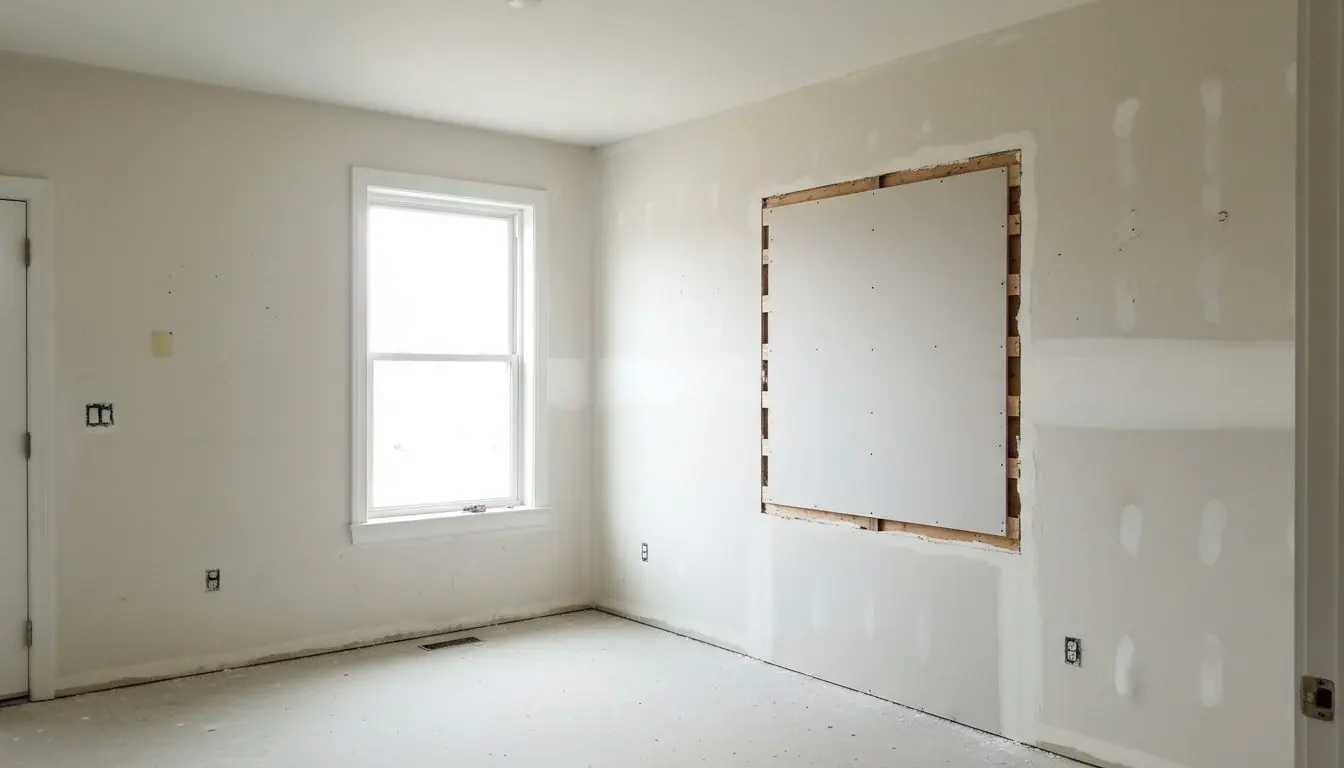
  • Drywall Repair

    For anybody living with damage they have stopped seeing, a tenant with a walk-through booked, or a landlord turning a unit around between lets. People pick this over a handyman because a patch backed on four edges and taped in paper stays flat, while a hole filled from a tub comes back as a visible ring inside a year and shows in every photograph after that.

    Learn more about Drywall Repair
  • Texture and Finishing

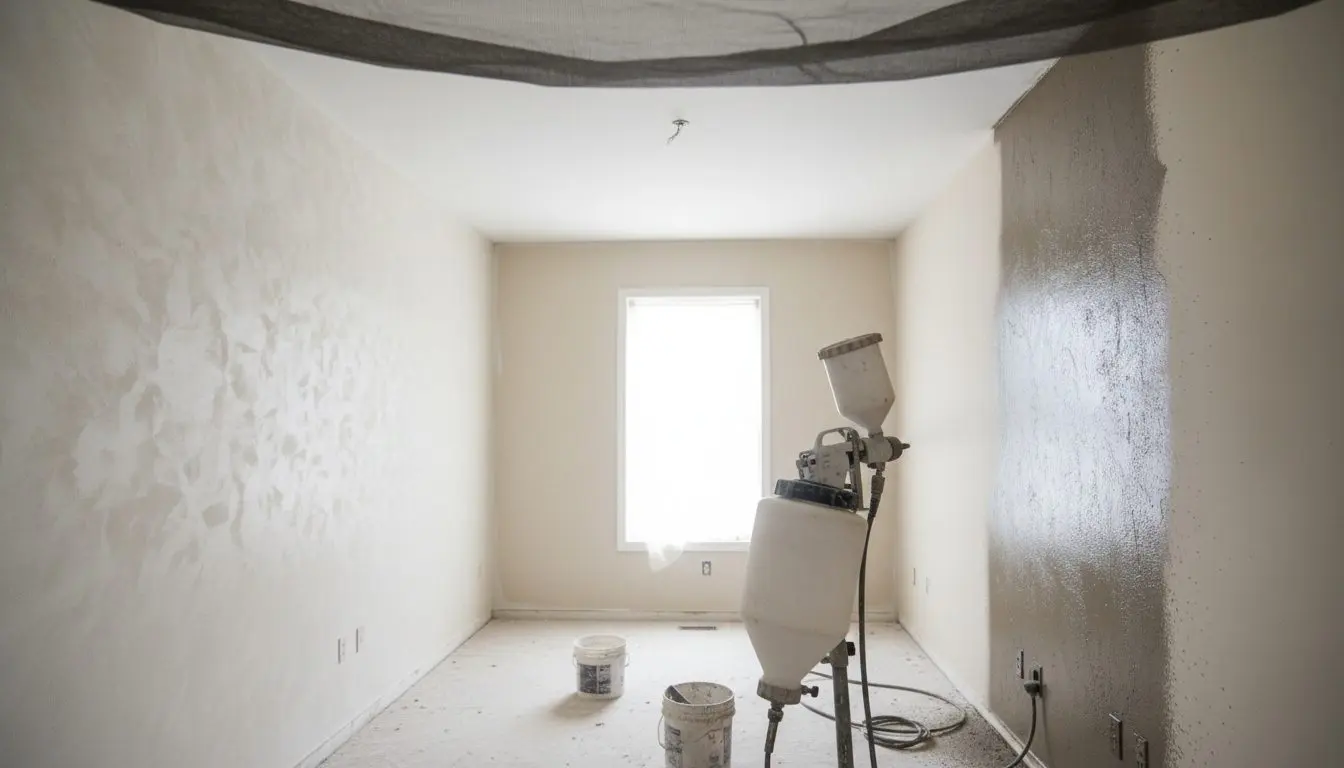
    For anybody whose repair is invisible in flat light and obvious in the evening, and for landlords who want one pattern through a building so the next patch is not a guessing game. People choose this over a painter with a hopper because the match is settled on a dried sample board, held against the wall in the light of the room, before the compressor is ever switched on.

    Learn more about Texture and Finishing
  • Ceilings

    For anybody standing under a ceiling that has started to bulge, crack or shed, and for anybody tired of the popcorn texture in every room upstairs. People pick this over a general contractor's crew because the joists get strapped level before any board goes up, and that one step is what decides whether a ceiling reads flat under a window's side light or shows every joint in it.

    Learn more about Ceilings
  • Water Damage Repair

    For anybody who has just found a brown ring over the stairs, a ceiling gone soft after February, or a bathroom that has been leaking into the room below for longer than anyone admits. People call us rather than a general restoration outfit because the meter goes into the framing before the board goes on, and that is what decides whether the repair holds or comes back next winter.

    Learn more about Water Damage Repair

From your first call to the day we sweep up and go

Three to seven days on site for most jobs, and the dust and the noise are done inside the first two.

  1. You call and we listen

    Same day callback

    You tell us what is happening and where. We ask what the house is, roughly when it was built and whether anything has been done to that wall before, because in Hartford the answer is usually yes.

  2. We come and look

    Within a few days

    One of us comes out, measures, and puts a screw into the wall somewhere discreet to find out whether it is board or lath and plaster. The written quote comes after that visit, never before it.

  3. The quote and the date

    Written the same week

    The quote names the board, the thickness, the finish level and the number of days. If something behind the wall changes it, you hear that while we are standing in the room, not on the invoice.

  4. Protection and set up

    First morning

    Floors get covered, doorways get zipped and a fan goes in a window. Furniture moves to the middle of the room and gets sheeted. Nothing is opened up until the room is closed off.

  5. Hanging, taping and sanding

    Two to five days

    Board goes up, joints are taped and three coats of compound go on with a drying day between them. Sanding is the dusty part and it is one day, not five.

  6. Patched and cleared

    Last afternoon

    We prime what we finished so you can actually see it, vacuum the room, take the sheeting and the scrap away, and walk the job with you before anybody leaves.

Call and we will come out, look at the actual wall and tell you what it needs.

Get a free quote

Why is one room quoted higher than another the same size?

Square footage is the smallest part of a drywall price. What the wall already is, what has to come off it first and how good the finish has to look under your own lights account for most of the rest.

What is behind the wall
Board comes off in sheets. Lath and plaster comes off in barrows, and the studs behind it are rarely straight or evenly spaced, so new board has to be shimmed and packed before a screw goes in.
Level of finish
Level 4 is right under paint on most walls. Level 5, a skim over the whole face, is what a big window or a row of downlights needs, and it adds about two days across a room.
Ceilings against walls
Everything overhead is slower. Sheets are lifted above the head, five-eighths board is heavier than half-inch, and every joint is worked above shoulder height, which roughly doubles the labour.
How much has to come out first
Stripping is priced apart from hanging because it is a different day's work. Plaster keys, layered wallpaper, glued panelling and two coats of old texture all have to leave before board arrives.
Access and protection
A third-floor room with a turn in the stair changes what size board can be carried up in one piece. So does a finished floor that has to be protected, and a family living in the house throughout.
Matching what is already there
Patching into a textured or plastered wall is a matching job rather than a filling job. Making a repair disappear under a raking light takes several passes and sometimes a skim across the whole wall.

Which of these apply to your job is settled on the visit rather than on the phone, and the quote says which ones we found. Get a free quote

What contractors and building managers ask us

Who is my point of contact once the job starts?

The foreman on your job, by name and by mobile, from the first morning to the sign off. The owner does the take off and the pricing and is on site weekly on anything running more than two weeks. You will not be routed through an office that has to call somebody else to answer you.

How do you keep dust out of the tenant space next door?

Poly screens with zip doors at every opening, floor protection out into the corridor, and a negative air machine venting the work area so air moves in rather than out. Sanding is scheduled for the quietest shift available. Adjacent tenants get told which nights are the noisy ones.

Do you pull the permit or do we?

You or your general contractor does, because the permit follows the overall scope rather than the drywall. We give you what the application needs from our side, including the assemblies we are building and the product data for them, and we work to the inspection dates once they are set.

Will you work under our contract and lien waivers?

Yes. We sign your subcontract, provide conditional waivers with each application and unconditional ones on payment, and we hold retainage on the terms in the contract. Send the documents with the drawings and anything we cannot agree to comes back marked before the job is booked.

Do you do the firestopping or does the mechanical trade?

We firestop the head of wall, the joints and any penetration we make. Penetrations made by other trades through our walls are theirs to seal, and we say so at the pre-construction meeting rather than at the inspection, because an unsealed sleeve fails a wall somebody else built.

How much notice do you need to mobilize a crew?

Two to four weeks for a booked start, and we will hold a date that far out once a scope is agreed. For punch-out work in a building you manage, a small crew can usually be on site within a week. Emergency work after a flood or a break in gets looked at the same day.

Can you match existing texture in an occupied corridor?

Yes, and the sample goes up on the wall before the repair does. Corridors in buildings from the seventies and eighties are usually orange peel or a light knockdown, and a matched patch in a hallway with wall washers on it needs the spray pressure set from a sample, not from memory.

Will you take on work where the drawings are still changing?

Yes, that is most tenant improvement work. What we ask for is a written change rather than a conversation on site, priced before it is built, so nothing turns up on the final invoice that you have not already seen. Layout changes after board is up are quoted as their own line.

Do you use our dumpster or bring your own?

Whichever you prefer, and it is worth settling before the first delivery. Board scrap and old material fill a container faster than most trades expect, so on a strip out we normally bring a trailer and take it away rather than fill a shared dumpster the whole site is using.

Can you work above a ceiling grid that is already in?

Yes, and it is a real cost worth naming early. Tiles come out and go back, the grid gets protected, and rated walls carried above a grid are slower to build and to firestop. Where a wall only needs to run to the underside of the grid, say so, because that is a different price.

Do your crews carry OSHA cards?

Everyone on site holds an OSHA 10 and the foremen hold an OSHA 30. Copies go into your site file at mobilization along with the certificate of insurance and the workers compensation certificate. If your building or your client needs a specific orientation, we will send people to it.

What happens if an inspector fails one of the walls?

We are back on site the next working day to correct it and we carry the cost where the work was ours. Most failures on rated walls are penetrations sealed by somebody else or a missing firestop detail at the deck, which is why we photograph the head of wall before the ceiling goes in.

Hartford Drywall Pros

Small repairs start inside two weeks, no matter how far out the big jobs are booked.

Hartford Drywall Pros hangs, tapes, finishes and repairs walls and ceilings across Hartford, in houses that range from new construction to pre-1940 plaster over lath. Four crews finish about two hundred and forty jobs a year, and a small repair usually starts inside two weeks even while a whole floor is booked further out. Trading here since 2007.

What nineteen years in Hartford's oldest houses taught us

  • Nineteen years working pre-1940 lath and plaster, trading since 2007
  • A screw goes into the wall before the quote, so we know board from plaster first
  • Small repairs start inside two weeks, even when the big jobs are booked further out
  • Nor'easters and ice dams are priced into how we protect a ceiling before we open it
  • We prime what we finish, so you can actually see the work before we leave

If a wall has gone soft after a storm, an old ceiling needs opening up, or a room needs drywall from scratch, call (860) 847-8709 and somebody will come and look at it. We will tell you on that visit whether it is board or lath and plaster behind the surface, and the written quote follows the visit, never before it.

(860) 847-8709

Give us a call

office@hartforddrywallpros.com

Send us a message

100 Pearl St, 14th Floor, Hartford, CT, 06103

Where to find us

Request a quote

(860) 847-8709 Get a free quote