
Ceilings in Hartford
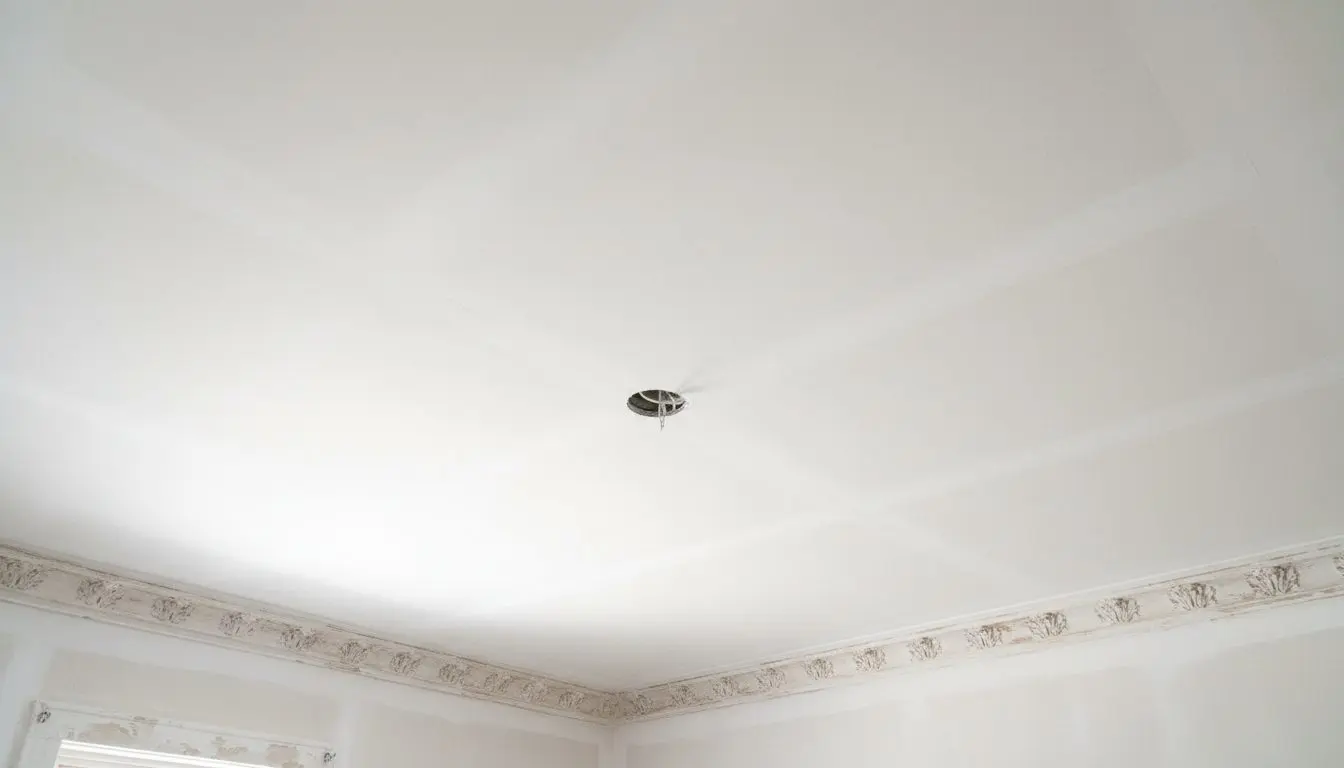
Ceilings taken down, rehung and finished in Hartford
Old ceilings out in a sealed room, five-eighths board fixed to joists we have strapped level first, and every joint taped in paper overhead.
Ceilings taken down in rooms somebody is living in
You get a ceiling that reads flat from the doorway and stays flat through a winter of the house moving.
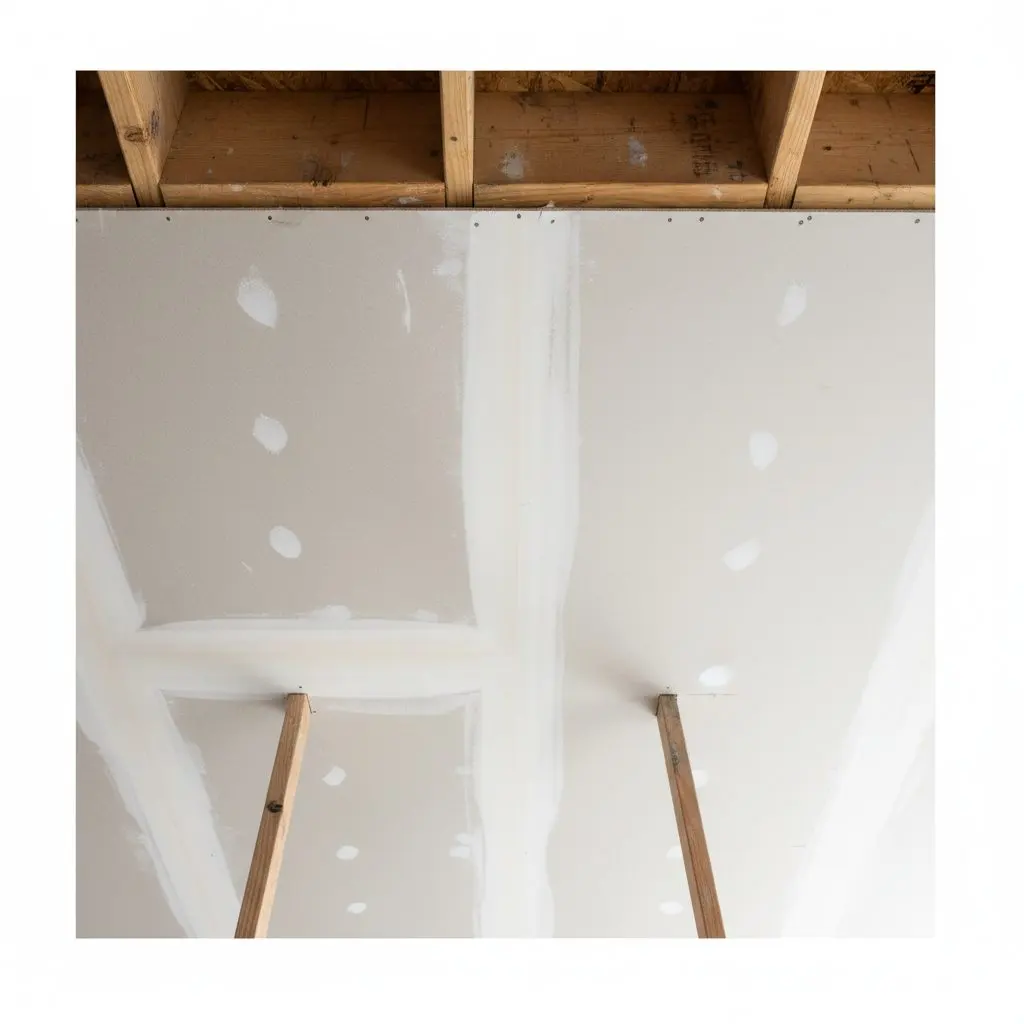
This covers whole ceilings taken down and rehung, sagging lath and plaster overhead, popcorn removal, new ceilings in additions and attics, and soffits boxed around ductwork. A ceiling that came down after a leak is water damage repair, and matching a swirl or knockdown across a ceiling that is staying belongs under texture and finishing.
We take down and reboard around fifty ceilings a year, most of them lath and plaster in houses built before 1940, and most of those in rooms somebody is living in.
Popcorn and textured ceilings scraped or overhung, sagging plaster ceilings taken down and replaced, cracked ceilings cut back and retaped, new ceilings in additions and attic conversions, and soffits and bulkheads built around ducts and waste pipes. Ceilings take five-eighths board fixed at seven inches into every joist, because five-eighths spans sixteen-inch centers without bellying between them and half-inch board overhead starts to sag within a few heating seasons.
A homeowner watching a brown bulge grow over the dining table after the bathroom above was replumbed, and a landlord in Frog Hollow with popcorn ceilings to get rid of between tenants.
Call for a free quote at (860) 847-8709. You will stop apologizing for that ceiling every time somebody looks up and start forgetting it is there!
Taking a plaster ceiling down and putting a flat one back
Everything from the first sheet of plastic on the floor to a primed ceiling a painter can start on.
- Furniture sheeted and the room sealed off
- Old ceiling taken down and carried out
- Joists checked, packed and strapped level
- Five-eighths board fixed at seven inches
- Paper tape and three coats overhead
- Texture matched, or left flat if you prefer
- Room vacuumed and the ceiling primed
Overboard the old ceiling, or take it down first
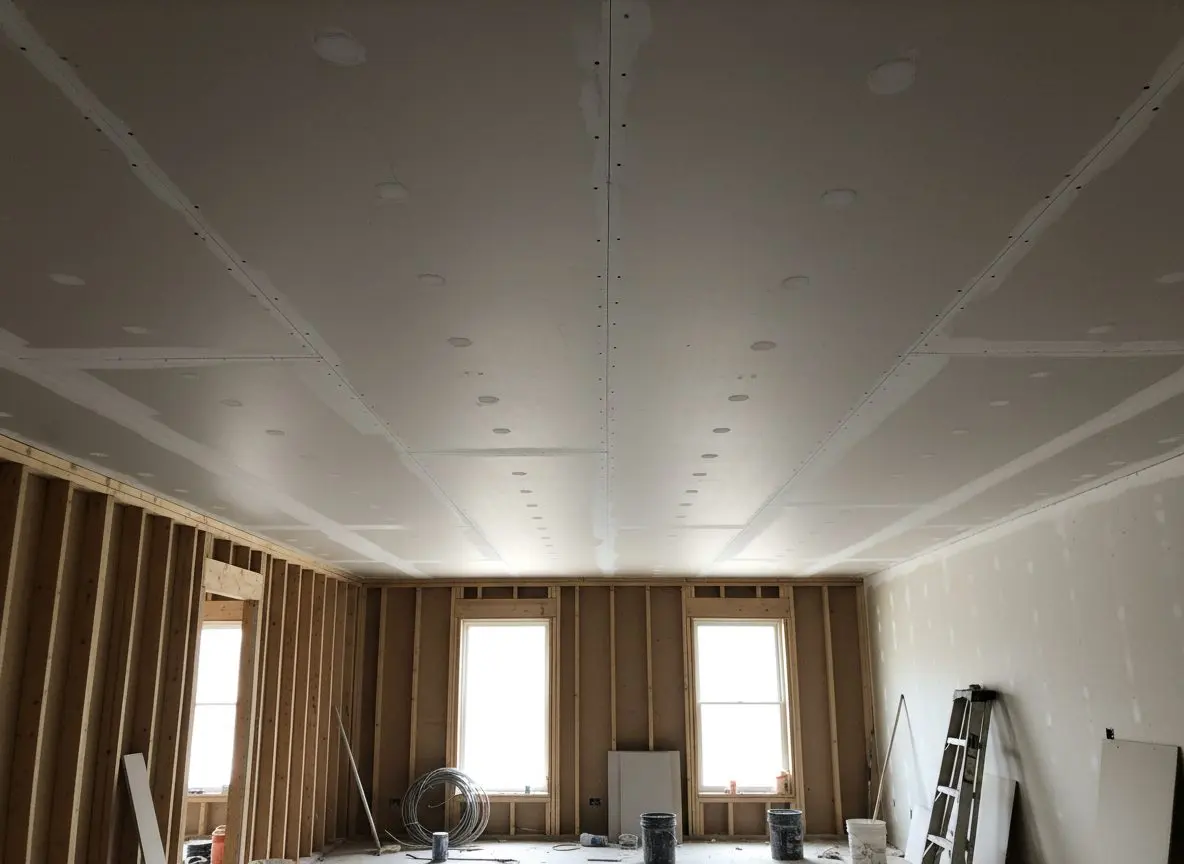
A ceiling that is still holding on can usually be drywalled over rather than pulled down.
Overhanging works when the plaster is still keyed to the lath across the room, when the joists will carry the extra weight, and when losing half an inch of height does not matter to you. It saves the demolition, the dumpster and the two dirtiest days of the job, and the crown molding usually survives it.
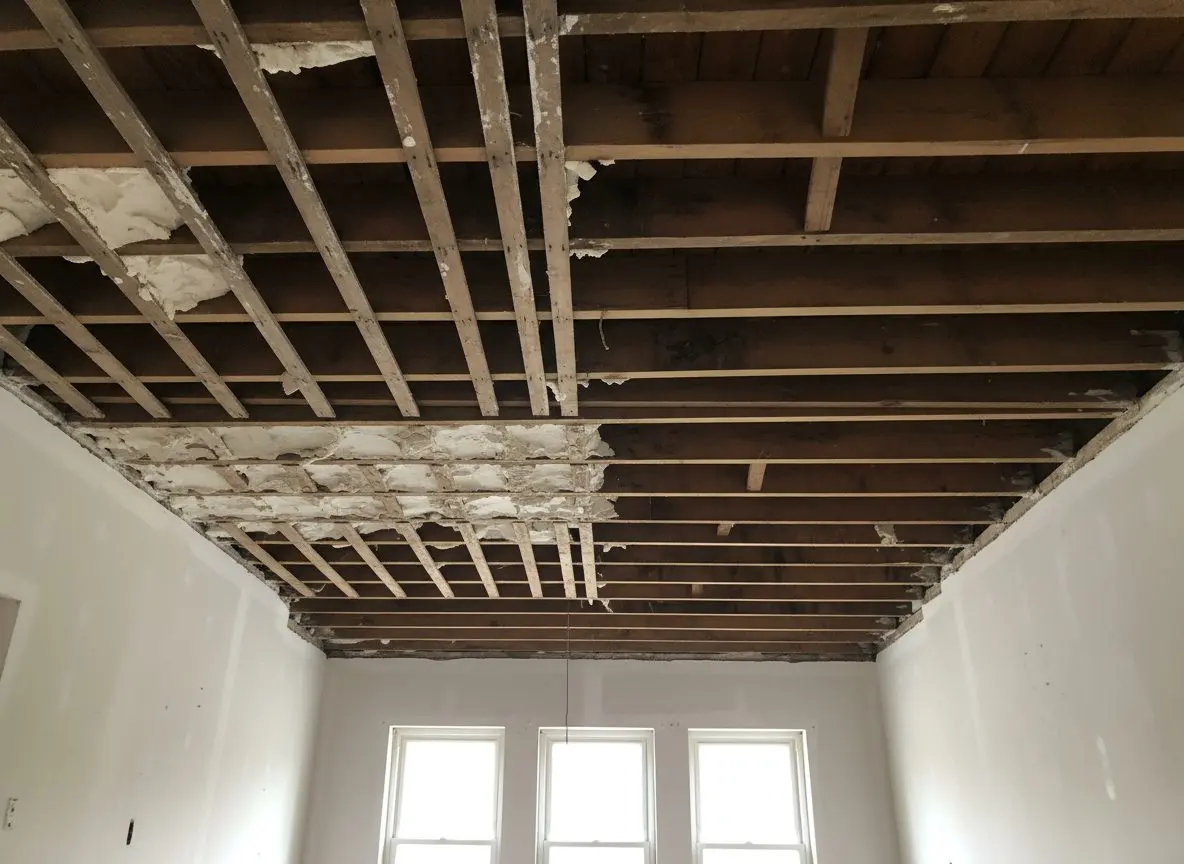
Taking it down is the only answer when the plaster has parted from the lath, when there are stains nobody can trace, or when the joists need strapping before anything will sit flat. New board screwed through a ceiling that is already letting go loads the failure, and it comes down with the new work attached.
We tell you which on the visit, including when it is the cheaper one. Pushing up hard in three or four places and pulling one small area back settles whether the keys have gone, and where they are sound the quote says overboard rather than strip.
Five-eighths board, seven inch screws and joists strapped level
Five-eighths board on every ceiling, screwed at seven inches into joists strapped level first.
Ceilings take five-eighths board and never half-inch, because it spans sixteen-inch joist centers without bellying between them. Board runs across the joists rather than with them, fixed with one and five-eighths coarse-thread screws at seven inches.
Joists are read with a laser and strapped with furring where they wander, because a ceiling shows a bow a wall would hide. Butt joints land on a joist or on backing, joints are taped in paper bedded in setting compound and coated twice more, and the perimeter is left free where the framing moves.
Type X goes up over a garage or between units. The ceiling is primed before we leave, because primer is the only way to see one under a raking light.
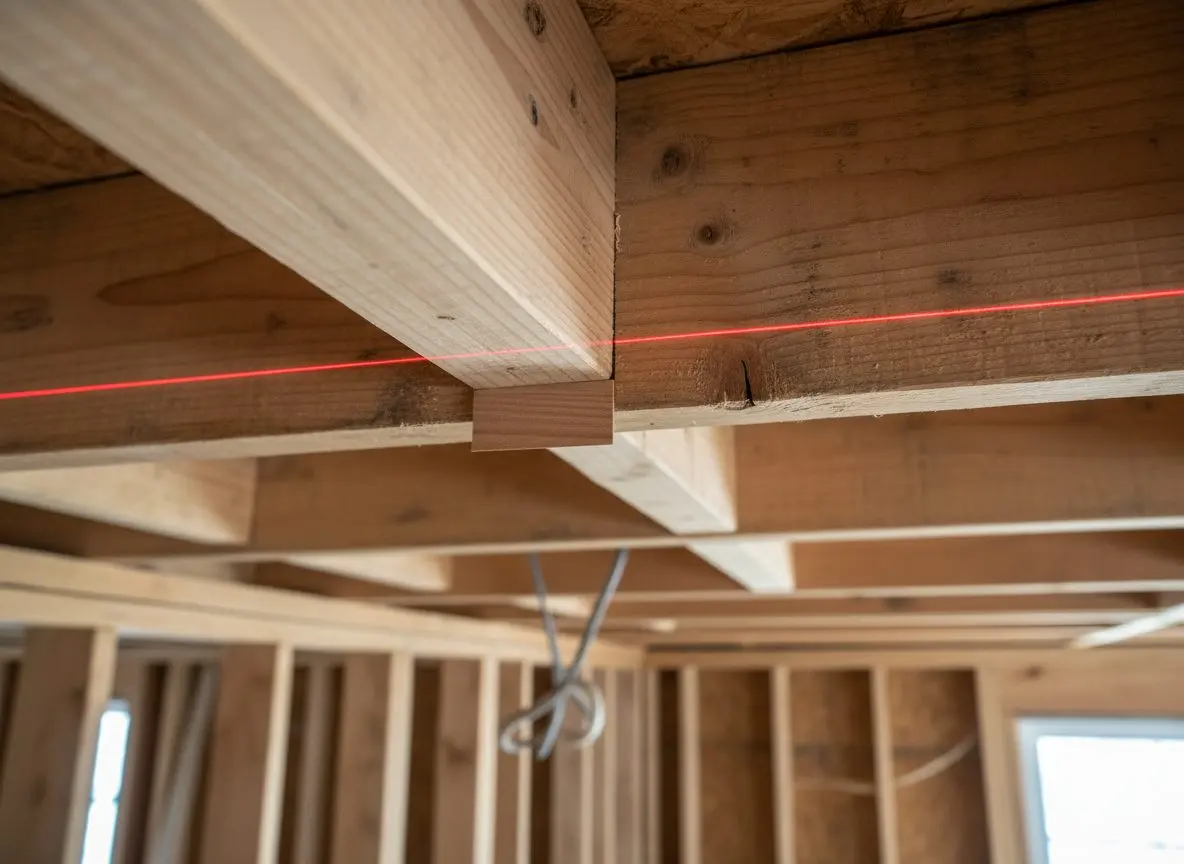
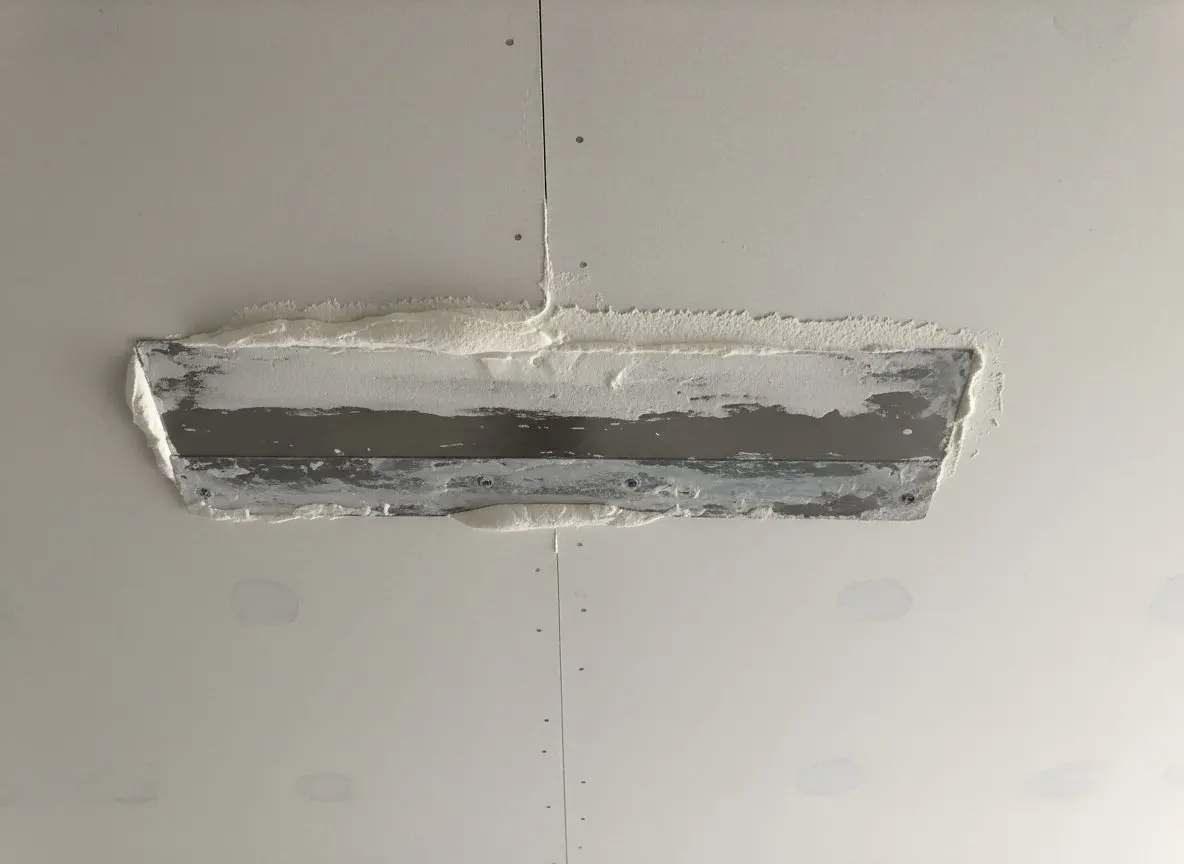
- Five-eighths board overhead, never half-inch
- Board run across the joists, not with them
- Screws every seven inches into each joist
- Furring strapped level where joists wander
- Paper tape overhead, never mesh
- Type X over a garage or between units
Ask the other two quotes which board and which finish level they mean. Then call us and we will name ours.
(860) 847-8709Why one ceiling costs more than the next
Two ceilings of the same size can be a week apart. What is up there now, how it comes down and how flat the finish has to look account for nearly all of it.
- What the old ceiling is
- Lath and plaster overhead comes down in barrows and weighs several times what board does, so a room can take two days to strip before anything new goes up. An old drywall ceiling comes down in an hour.
- Ceiling height
- Eight feet is worked off a bench. Ten feet and over needs staging, two people on every sheet and slower finishing, and a stairwell ceiling needs a tower built inside the stair before anybody starts.
- How level the joists are
- Joists that have sagged, or been notched by a plumber, get strapped with furring and shimmed before board goes up. On a ceiling every bow shows, so it is not a step that can be skipped to save a day.
- Texture or a flat finish
- A flat ceiling wants a skim across the whole face and careful sanding, because side light from a window crosses a ceiling and finds every joint. A knockdown or swirl match is quicker.
- Lights, vents and hatches
- Every recessed light, extract fan, sprinkler head and access hatch is a measured cut and a sealed edge. A dozen of them turns a plain rectangle into a day of cutting and patching.
- Whether the room stays in use
- A ceiling in an empty room is the fastest work we do. The same ceiling over furniture that cannot leave means sheeting, moving, working around it and putting the room back each evening.
Which of these apply to your job is settled on the visit rather than on the phone, and the quote says which ones we found. Get a free quote
From your first call to the day we sweep up and go
Three to seven days on site for most jobs, and the dust and the noise are done inside the first two.
Call and we will come out, look at the actual wall and tell you what it needs.
Get a free quoteWhat a flashlight at the inspection finds overhead
A ceiling is the one surface in a room that nobody looks at until it is wrong.
No published survey prices a ceiling on its own. The Cost versus Value report measures whole projects in New England and never separates the board overhead from the room around it, so a percentage put against a rehung ceiling here would be invented.
What can honestly be said is which of your choices survive a buyer walking through with a flashlight. A ceiling strapped level before hanging still reads flat in ten years.
Popcorn scraped off and skimmed moves a house forward twenty years for the price of two days. A stain rolled over rather than cut out comes back on the inspection report, because a moisture meter finds it whatever color it has been painted.
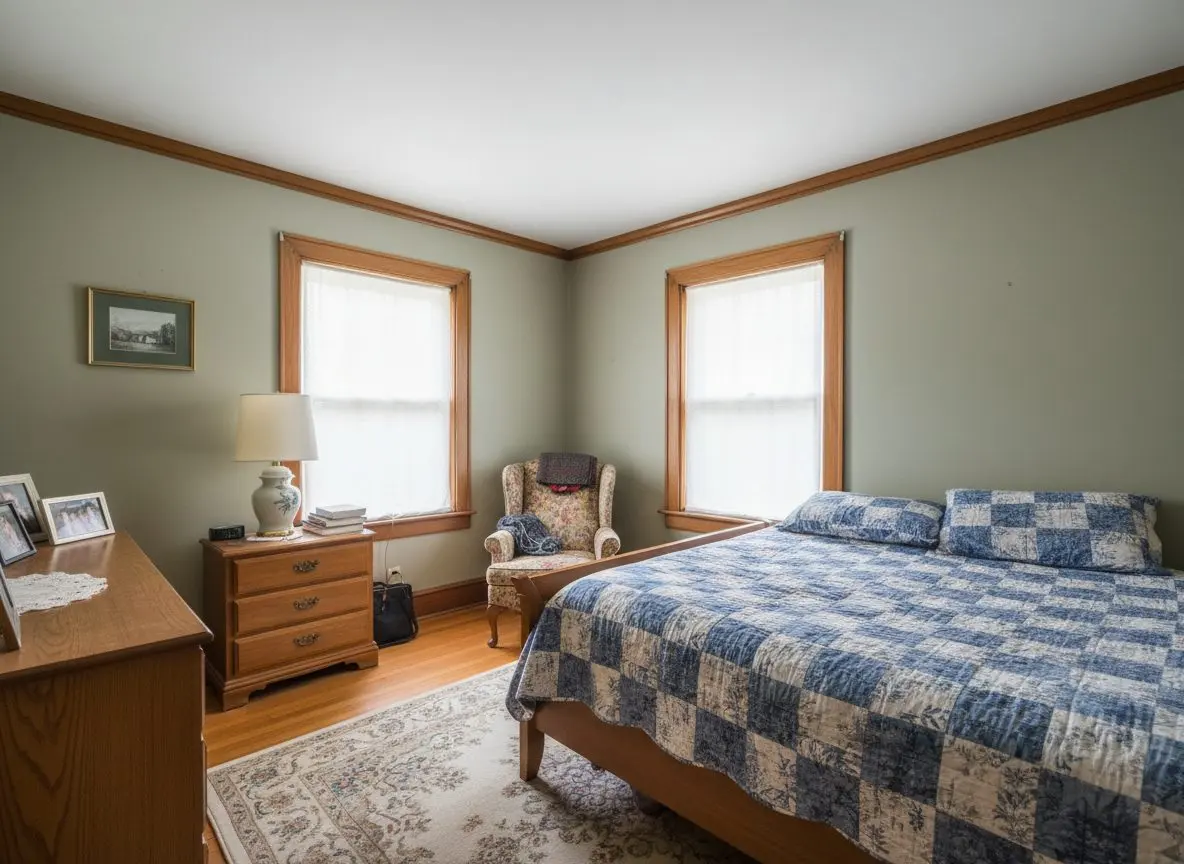
Century old plaster keys, wandering joists and ice dams
Plaster ceilings here hang on keys a century old, joists were sawn before sizes were standard, and an ice dam lands on the ceiling before it shows anywhere else.
- Plaster held up by hundred year old keys
- A pre-1940 Hartford ceiling is wood lath with plaster pushed through it, and the keys squeezed out behind the lath are all that holds it up. They snap with age and vibration, so a ceiling can sound solid at one end of a room and loose at the other.
- Joists sawn full size and set by eye
- Framing in these houses was cut before lumber sizes were standard and set where the carpenter wanted it, so centers wander and depths vary across one room. We strap the whole ceiling with furring and shim that level rather than trust sixteen inches.
- The ceiling is where an ice dam shows up
- Water getting past the shingles at a frozen eave runs along the top of a ceiling and drops through at the first joint or light fitting. The board goes soft in a patch with edges nobody can see, so a stained ceiling is cut back, not painted over.
Ceilings in Simsbury, Blue Hills and the West End
Ceilings taken down, hung and handed back, with the awkward part of each one written underneath rather than left to the photograph.
-
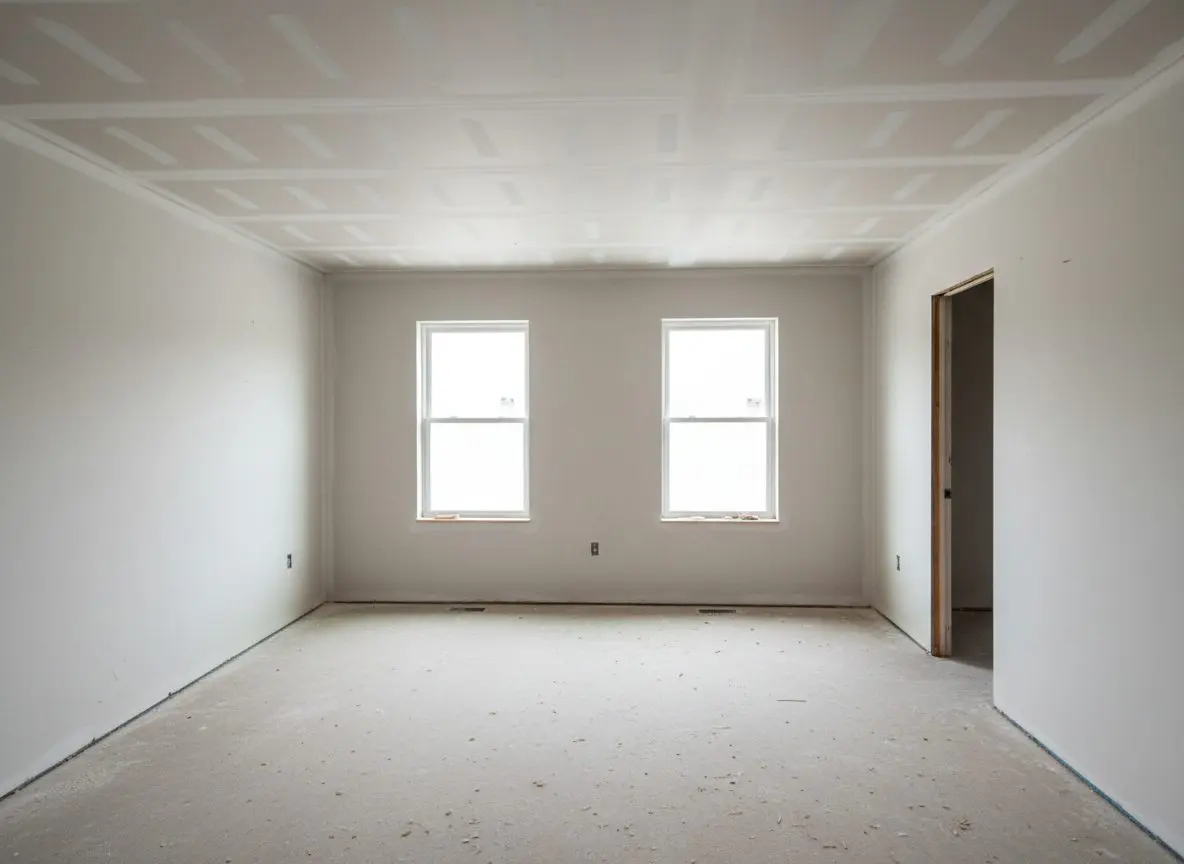
Plaster ceilings down, board up
Simsbury
Two rooms of sagging lath and plaster taken down in a day, the joists strapped level with furring, then five-eighths board taped flat and primed.
-
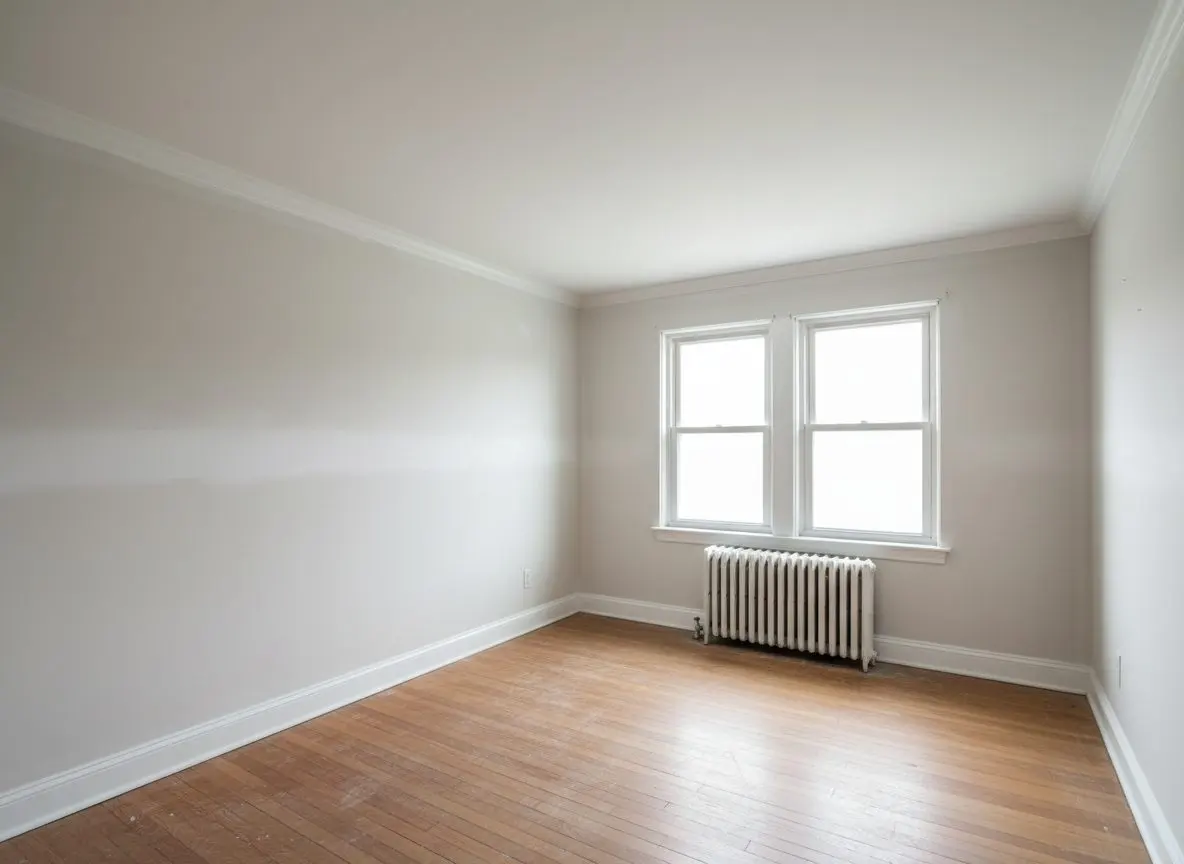
Popcorn off three bedrooms
Blue Hills
The 1970s texture was tested for asbestos first, then scraped wet, skimmed twice and sanded flat. The crown molding stayed up and was cut in around.
-
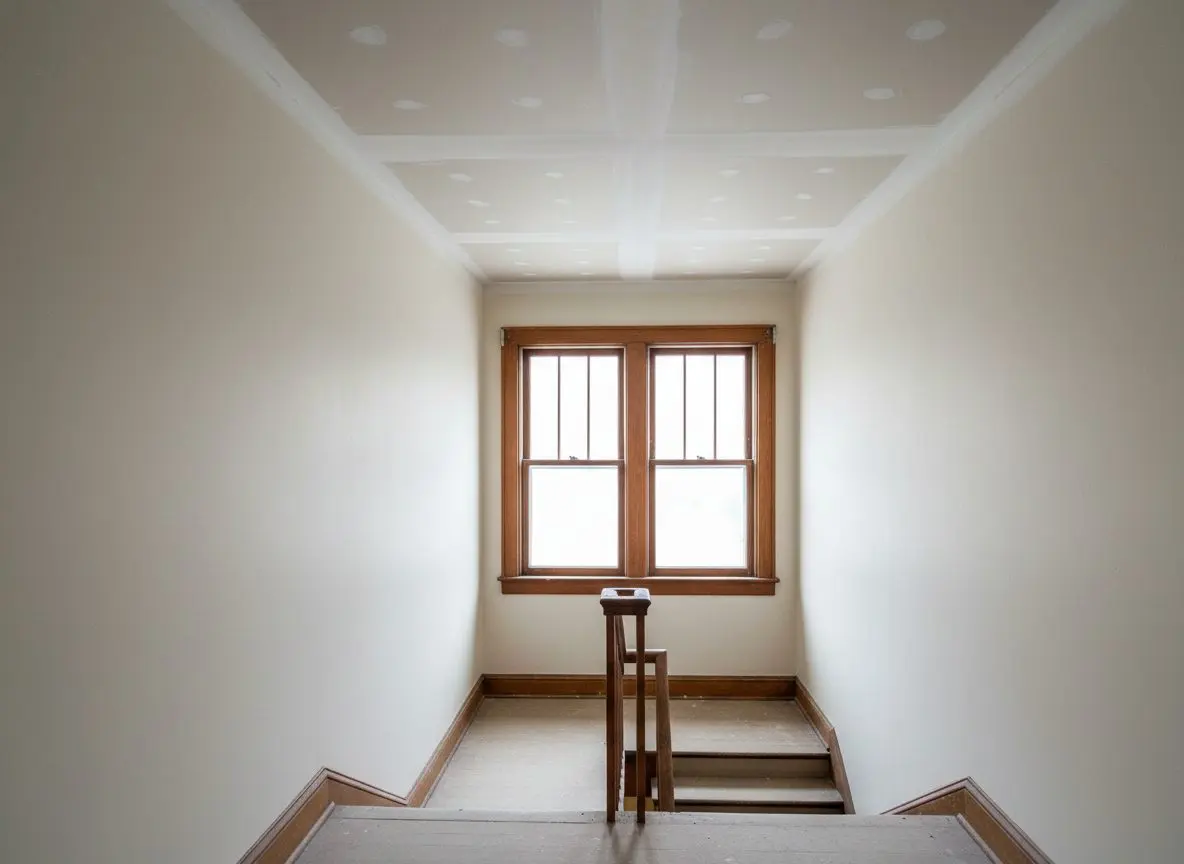
Stairwell ceiling, sixteen feet up
West End
A tower built inside the stair to reach it, board lifted up in two pieces and taped from the platform. Four days, and the stair stayed passable throughout.
-
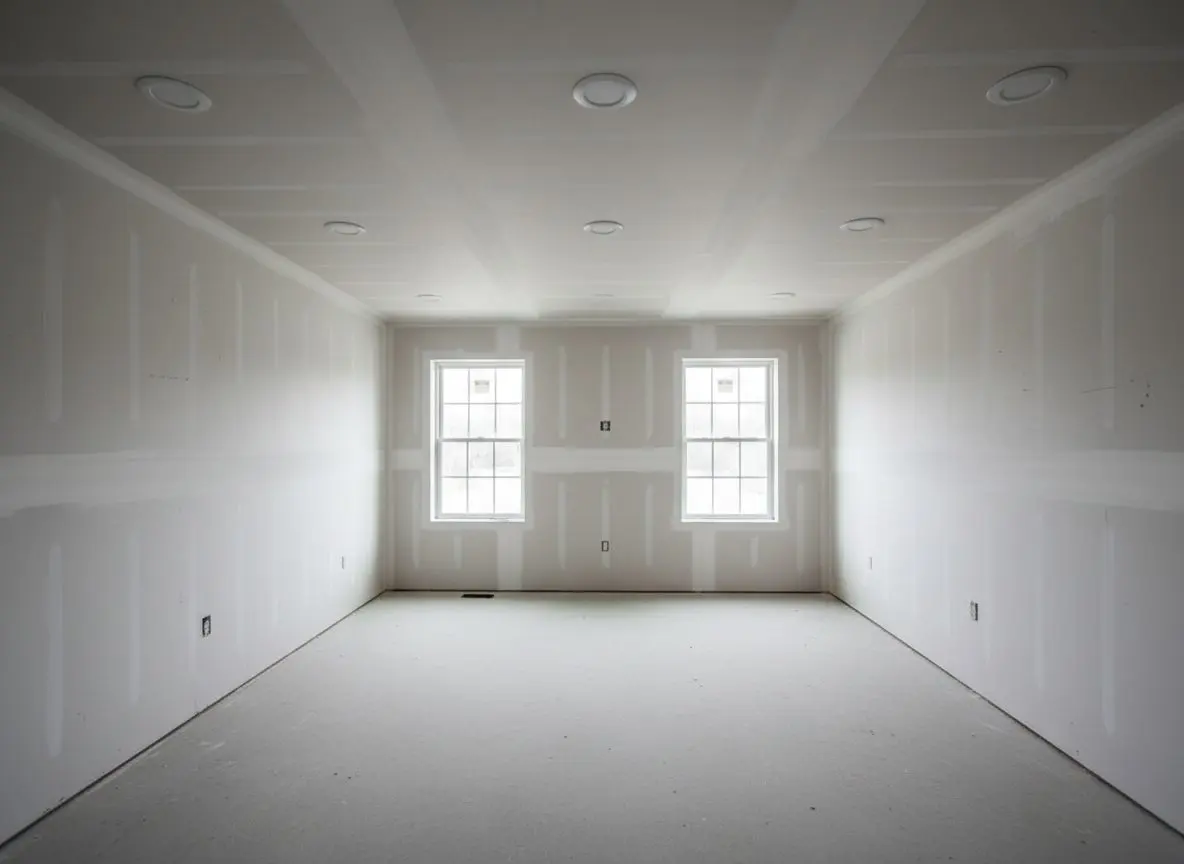
Ceiling with twelve downlights
Farmington
Every hole cut from the housings rather than a tape measure, so the trims sit flat to the board and the two rows line up down the length of the room.
-
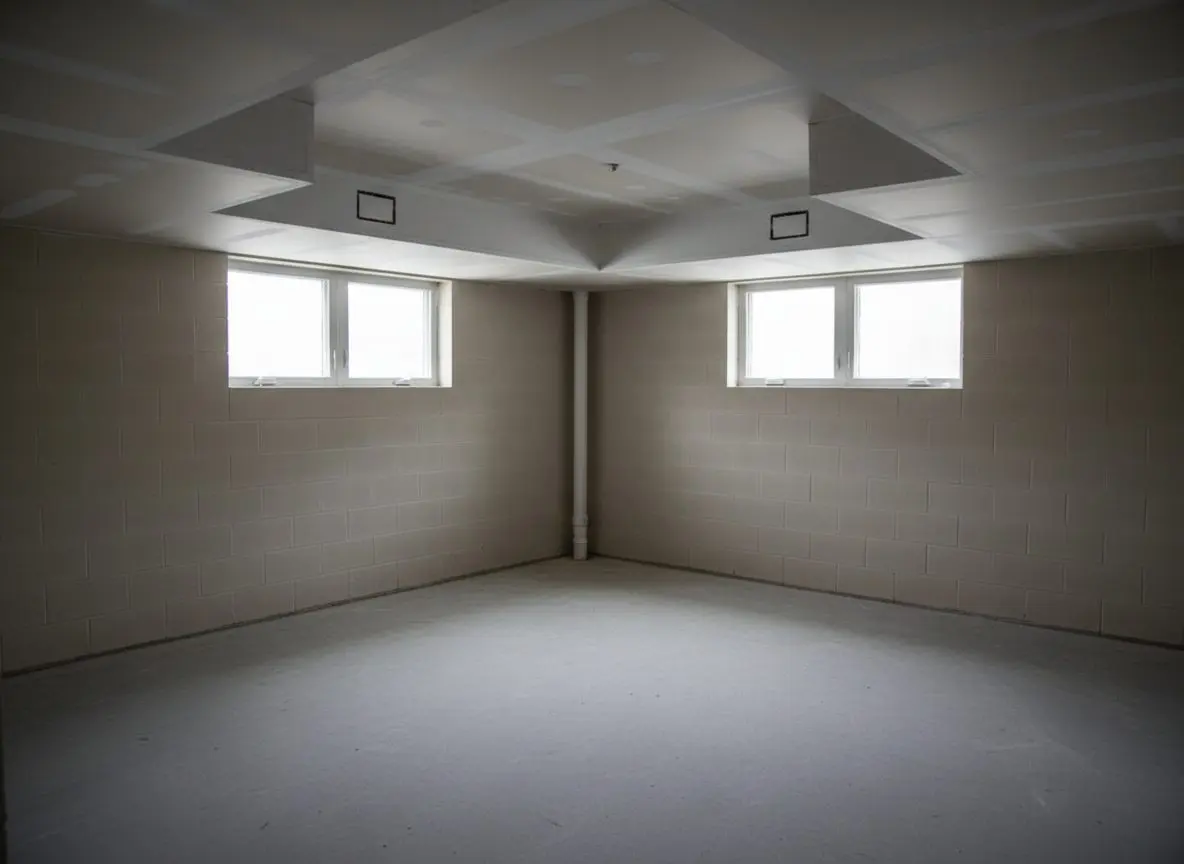
Basement ceiling boxed around ducts
East Hartford
Soffits framed and hung around the ductwork and the waste stack, with access panels left at the valves so nothing has to be cut open later.
-
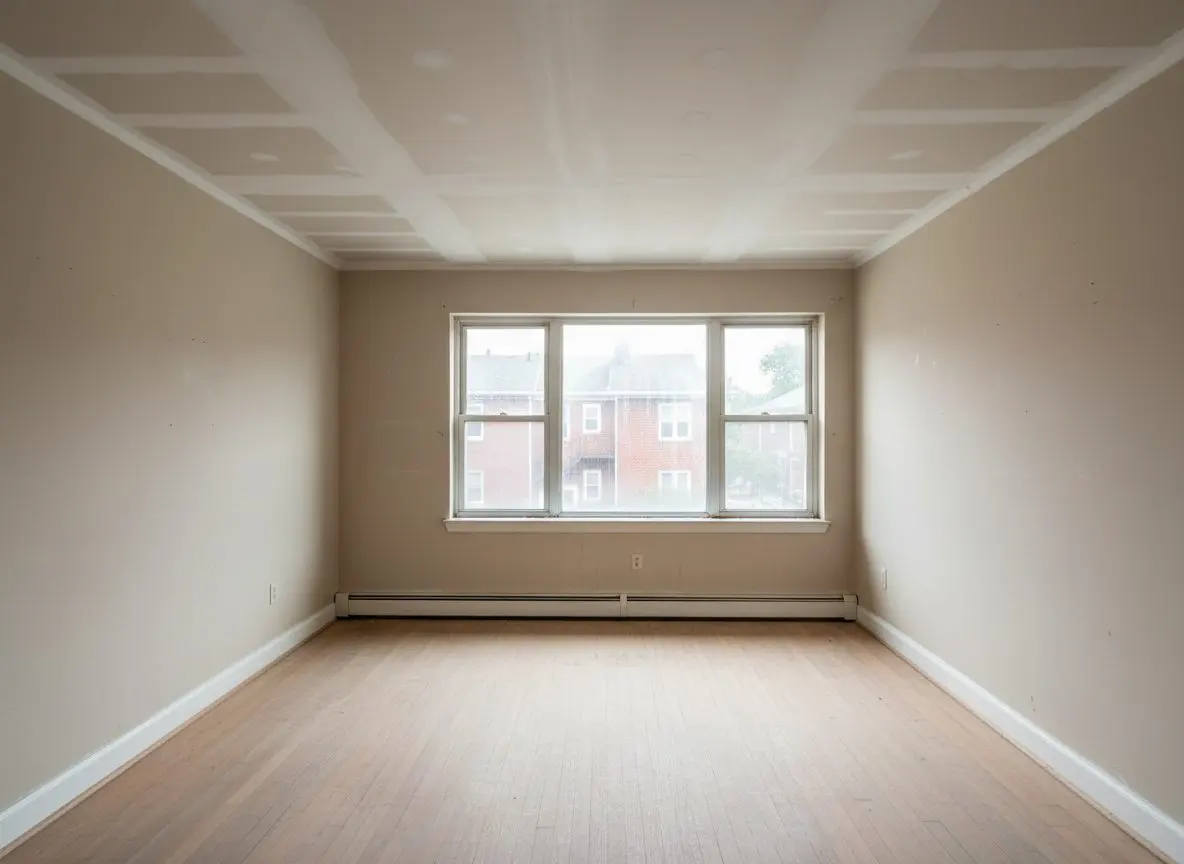
Apartment ceiling between tenants
Behind the Rocks
One unit, five days. Ceiling down, wiring left clear for the electrician, then rehung and primed to a fixed date so the letting did not slip.
What people said once they stopped looking up at it
-
Rated 5 out of 5
Second floor turned around between tenants in three days, patched, skimmed and primed. The stair stayed clear the whole time.
Kevin R. Frog Hollow Drywall Repair -
Rated 5 out of 5
A pipe let go over the kitchen in March and half the ceiling came down. They stripped it back, then made us wait a week for the framing to dry before boarding. Glad now they did not just cover it.
Angela P. Bloomfield Water Damage Repair -
Rated 5 out of 5
Addition was framed and left for us to sort out. They shimmed the studs straight before ordering a single sheet, and the long wall with the afternoon sun on it does not show a joint anywhere.
Tom D. Glastonbury Drywall Installation
If you would rather see the work than read about it, ask and we will point you at a finished job near you.
Get a free quoteFAQs
Frequently asked questions
What people want to know before a ceiling comes down
Is my popcorn ceiling likely to have asbestos in it?
If the house or the ceiling dates from before about 1980, treat it as though it does until a test says otherwise. A sample goes to a lab and the result takes a few days. If it comes back positive, removal is a licensed abatement contractor's work and we board or finish afterwards rather than scrape it ourselves.
Can you save an original plaster ceiling and its crown molding?
Often, and it is worth asking for. Where the keys are sound across most of the room the ceiling can be washered and screwed back up to the lath, skimmed and kept, and the molding never comes off. Where the plaster has parted over half the room, the honest answer is that saving it costs more than replacing it.
How long is a ceiling from start to primed?
Two to four days for one room, spread across a week. Stripping is a day, hanging is a day, and the taping is three coats with a drying day between them. Texture and primer are the last morning. A whole floor of ceilings runs two to three weeks and we do them room by room so you keep somewhere to sleep.
Do I need to take the light fittings down first?
No, we take them down and put them back, and we ask you to turn the circuit off at the panel before we start. Anything you would rather handle yourself, such as a chandelier or a fitting with a shade you value, is better off the ceiling and out of the room before the first morning.
My ceiling is sagging in the middle. Is that dangerous?
A visible bulge in a plaster ceiling means the keys have let go over an area and it is holding on the lath alone, so keep people out of the room and call us. It rarely falls without warning, but a heavy plaster ceiling coming down is enough to hurt somebody, and it is not a repair worth waiting on.
Will you be able to see where the patch meets the old ceiling?
Not if the old ceiling is flat and painted, because the joint is taped, coated three times and feathered a foot either side. On a textured ceiling it depends on the texture, and on a ceiling with a raking window across it we would rather skim the whole face than promise a patch will vanish.
Can you add insulation while the ceiling is open?
Yes, and an open ceiling is the only cheap time to do it. Mineral wool between the joists cuts the footfall noise from the room above, and on a top floor ceiling it is worth checking what is in the attic while somebody is up there. It is priced separately so you can see what it costs.
Do you fit the recessed lights or just cut the holes?
Your electrician fits them and we cut to their setting out. What we do is cut every hole from the housings themselves rather than from a tape measure, and hold the rows straight along the board, because a row of trims that wanders by half an inch is the thing people notice from the sofa.
What happens to the attic hatch and the loft ladder?
They come out, the new ceiling is hung around the opening and the hatch is refitted and patched. If the ladder is old and the frame is soft it is worth replacing it while the ceiling is open, because doing it afterwards means cutting a new ceiling somebody has just paid to finish.
How high a ceiling can you reach without scaffolding?
Up to about ten feet is worked off benches and stilts. Above that, and over a stairwell in particular, we build a tower and price it in, because working a ceiling off a ladder is how people fall and how joints get finished badly. Tell us the height on the phone and we will say which it is.
What do you do with the wiring and pipes you find up there?
We leave them alone and tell you what is there. Old knob and tube wiring, abandoned gas pipe and pipework running under the joists all turn up in these houses, and an open ceiling is the cheapest chance an electrician or a plumber will ever get at them. Deal with it before we board.
Can you do a basement ceiling with pipes and ducts in the way?
Yes, either hung tight to the joists with soffits boxed around the runs, or dropped below everything if the height allows. What matters is leaving access panels at valves, clean outs and junction boxes, because a ceiling with no way into it is one somebody cuts a hole in within two years.
Hartford Drywall Pros
Small repairs start inside two weeks, no matter how far out the big jobs are booked.
Hartford Drywall Pros hangs, tapes, finishes and repairs walls and ceilings across Hartford, in houses that range from new construction to pre-1940 plaster over lath. Four crews finish about two hundred and forty jobs a year, and a small repair usually starts inside two weeks even while a whole floor is booked further out. Trading here since 2007.
What nineteen years in Hartford's oldest houses taught us
- Nineteen years working pre-1940 lath and plaster, trading since 2007
- A screw goes into the wall before the quote, so we know board from plaster first
- Small repairs start inside two weeks, even when the big jobs are booked further out
- Nor'easters and ice dams are priced into how we protect a ceiling before we open it
- We prime what we finish, so you can actually see the work before we leave
If a wall has gone soft after a storm, an old ceiling needs opening up, or a room needs drywall from scratch, call (860) 847-8709 and somebody will come and look at it. We will tell you on that visit whether it is board or lath and plaster behind the surface, and the written quote follows the visit, never before it.
Give us a call
office@hartforddrywallpros.com
Send us a message
100 Pearl St, 14th Floor, Hartford, CT, 06103
Where to find us