
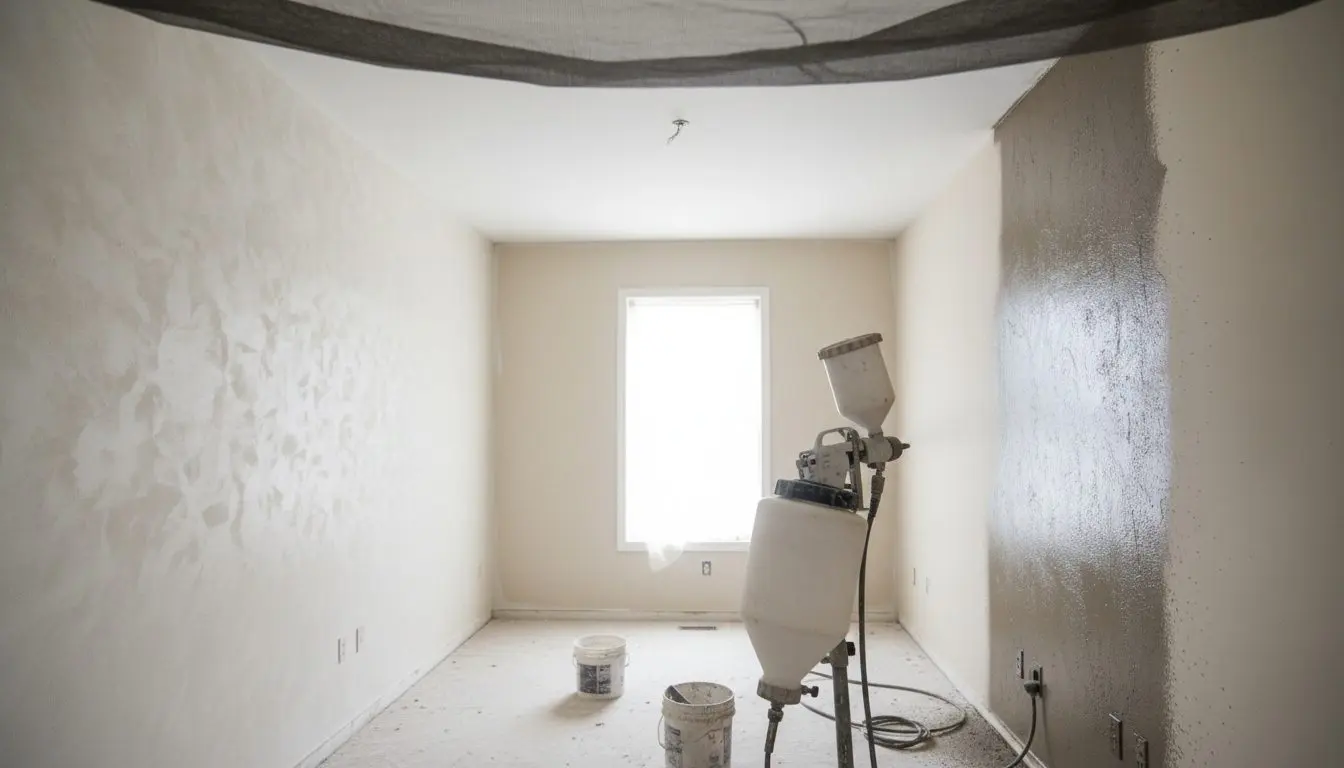
Texture and Finishing in Hartford
Knockdown, orange peel and skip trowel matched in Hartford
Sample boards sprayed against your own wall first, the same mix and tip used on the job itself, and new work carried to a corner rather than stopped in open wall.
Matching a pattern somebody else sprayed forty years ago
You get a wall where the new work and the old read as one surface, in the same pattern and the same sheen.
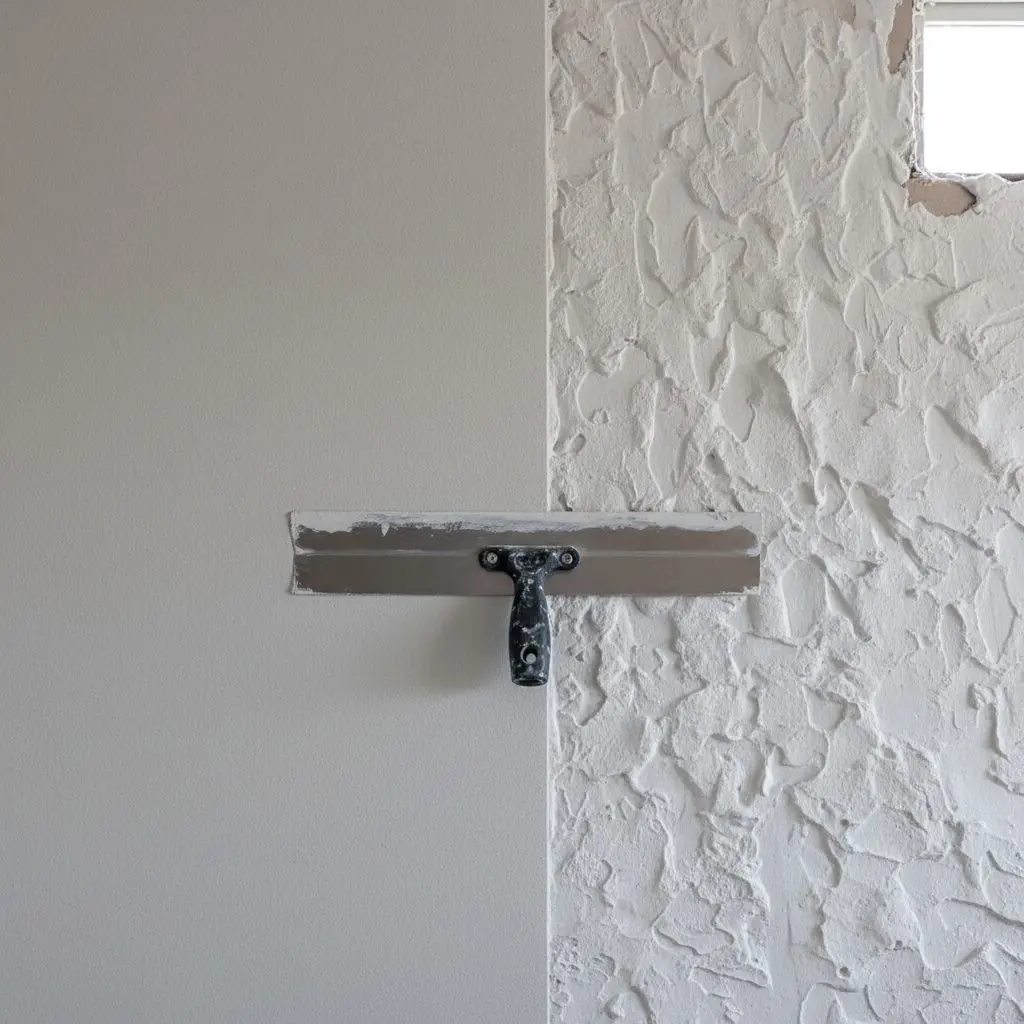
This covers matching a sprayed or trowelled texture into work already done, texturing new board through a whole room, and taking a wall or ceiling the other way to a flat Level 5 skim. The hole or crack itself is drywall repair, and scraping a popcorn ceiling off before anything gets matched sits under ceilings.
Texture is on about seventy of the two hundred and forty jobs a year, and on more than half of those it is matching into a pattern somebody else sprayed decades ago.
Knockdown, orange peel, skip trowel, hand trowel and sand swirl are the patterns we are asked for most, along with Level 5 skimming where a room is going flat instead. Every match starts on a sample board sprayed with the same compound, the same tip and the same air pressure the wall will get, left to dry, then held against the existing surface in the room's own light before a drop of it touches the wall, because a pattern judged wet and under a work light is a pattern that comes out wrong.
A homeowner whose new patch is invisible in flat light and obvious at six in the evening, and a landlord who wants one pattern through eight rooms so the next repair stops being a matching job.
Ask for a free quote at (860) 847-8709. You will stop pointing the patch out to people before they notice it and start saying nothing at all!
From the first sample board to a primed surface
Everything from a sprayed sample board to a primed surface a painter can roll.
- Existing pattern identified from a sample
- Test boards sprayed, dried and compared
- Room masked, floors and openings covered
- Substrate skimmed and primed where patchy
- Compound thinned by measure, not by eye
- Texture sprayed or trowelled to the match
- Knocked down on time, then primed
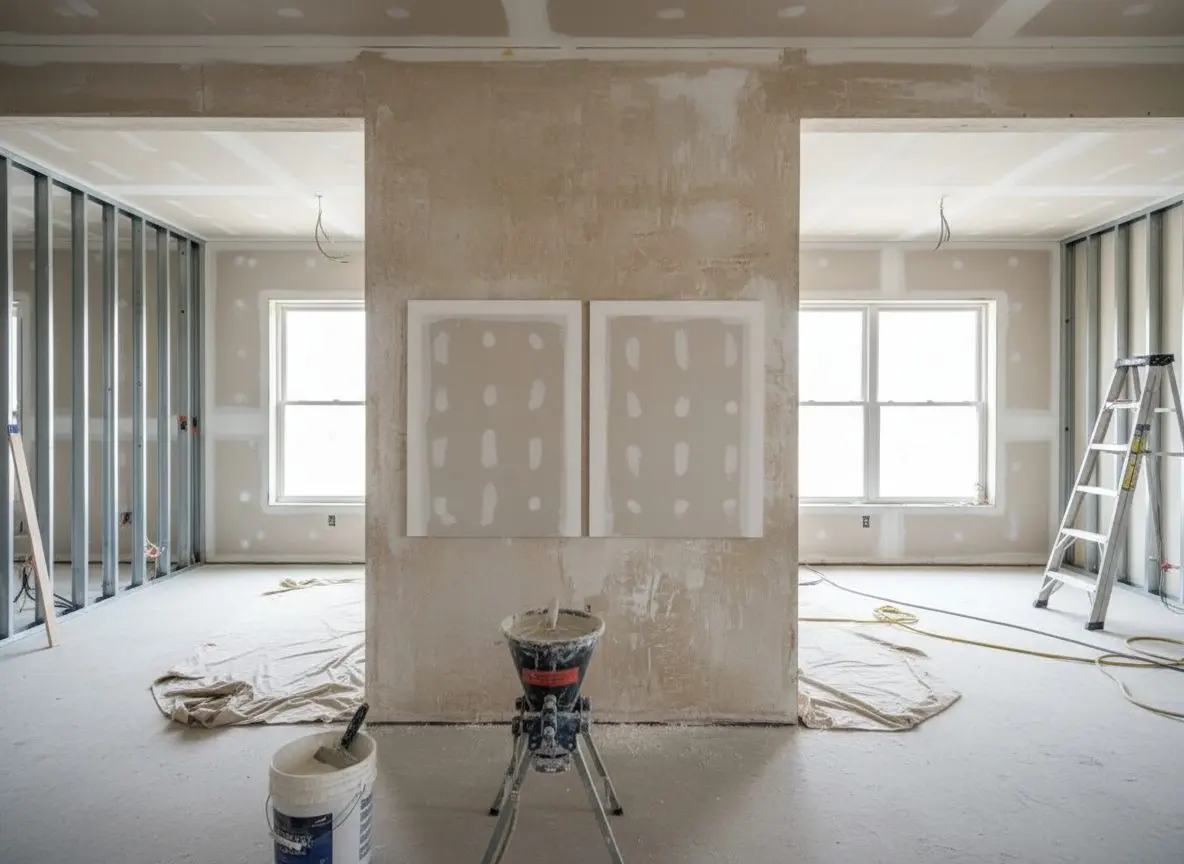
Matching the texture, or taking the room back to flat
Matching the old texture is quicker and cheaper than flattening a room, and it is the right answer more often.
Matching is right when the existing pattern is consistent across the room, when the surface under it is sound and reasonably flat, and when the new work is confined to one area. A knockdown sprayed to the same mix and knocked at the same moment is invisible from a few feet away, which is where anybody actually stands.
Flattening is the answer when the texture is heavy enough to be hiding a wavy wall that will show the moment it goes, when three or four patterns from earlier work meet in one room, or when the finish is going under a dark color or by a big window. A match over a bad substrate copies the pattern and keeps the fault.
You get told which on the visit, including when the cheaper one is right. We spray a sample, hold it against the wall in daylight and again under the lamps you use in the evening, and if it disappears we say match. If it does not, you hear that before anybody has committed to a week of skimming.
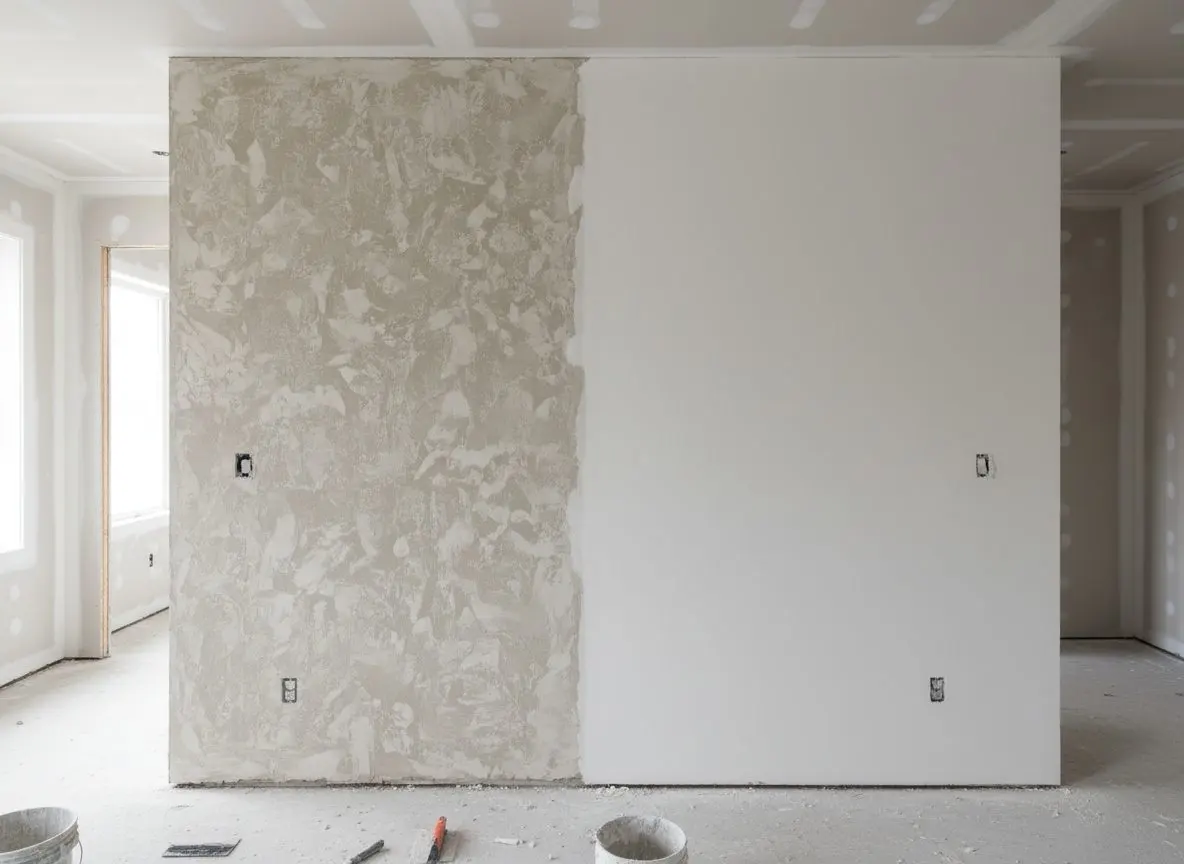
Sample boards, measured mixes and the right tip for the pattern
Sample boards before the wall, the same tip and mix used on both, and every texture primed before it is painted.
A match starts on a sample board rather than on your wall. The compound is thinned by measure rather than by eye and sprayed through the tip the wall will get, a four or a six for orange peel and an eight or larger for knockdown.
The board is dried and held against the existing surface in daylight and again under the room's lamps, because a pattern that matches wet does not always match dry.
A patchy or glossy surface is skimmed and primed first, since bare compound and painted plaster pull water out of a spray at different rates and the pattern changes across the join. Knockdown is knocked when the surface is ready rather than when it suits, and every texture is primed before turnover.
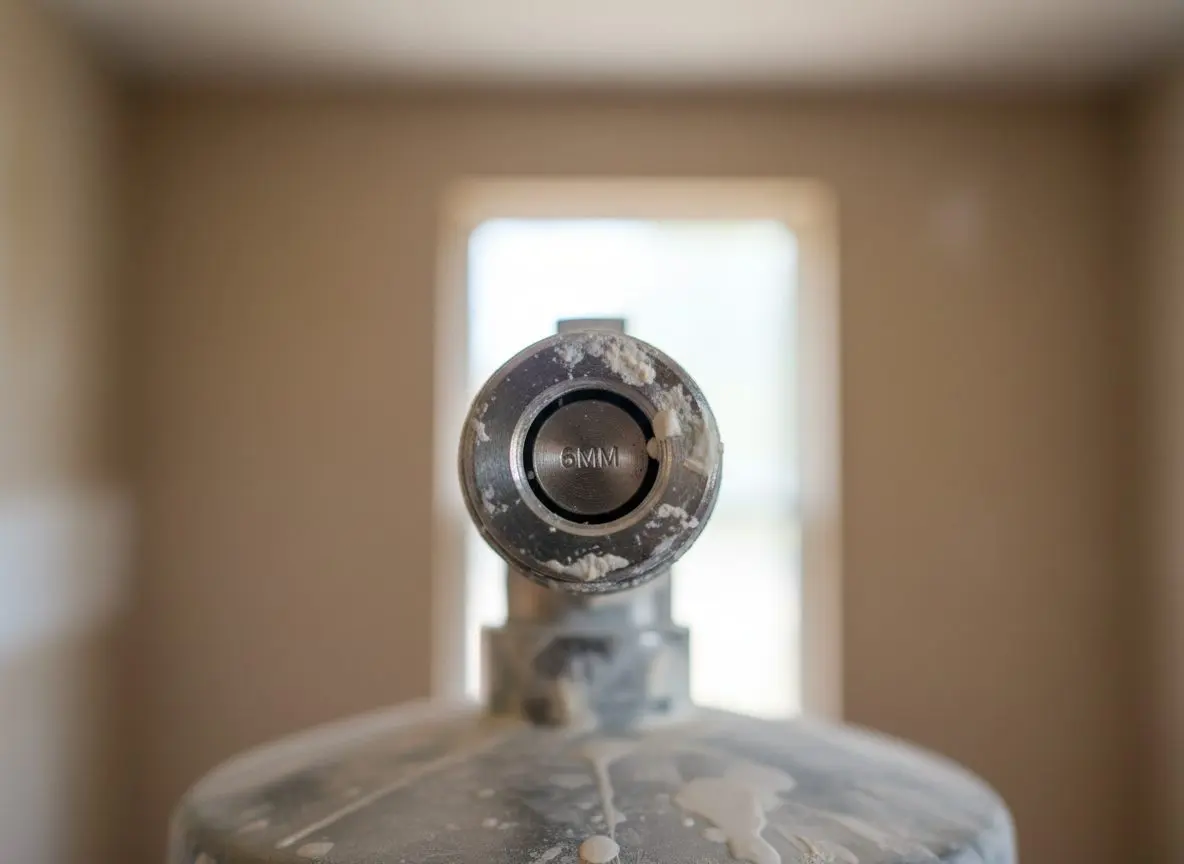
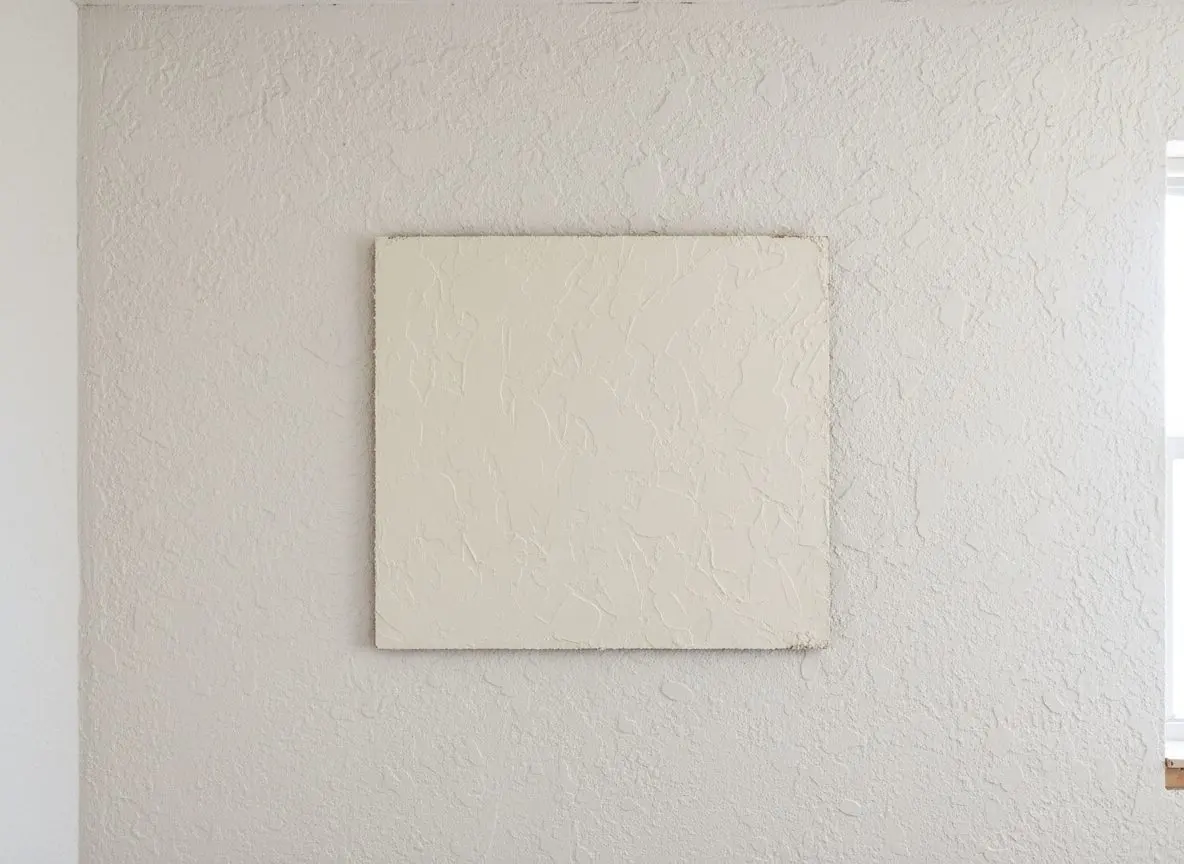
- Sample board sprayed before the wall is touched
- Compound thinned by measure, not by eye
- Tip size matched to the pattern being sprayed
- Patchy substrate skimmed and primed first
- Knockdown knocked at dwell, not on the clock
- Texture primed before it is handed over
Ask the other two quotes which board and which finish level they mean. Then call us and we will name ours.
(860) 847-8709What decides the price of texture work
Two rooms of the same size can be a week apart. The pattern itself, the state of what is under it and how much of the room has to be masked account for most of the difference.
- Which pattern it is
- Orange peel is one pass off a gun. Knockdown is a spray, a wait and a knock across the whole surface against the clock, and skip trowel goes on by hand a trowel width at a time, so the hours differ threefold.
- Matching against starting fresh
- Texturing a new room is one mix and one pass. Matching into an existing pattern means sample boards, at least one extra visit and sometimes three attempts before the new work disappears, and that is all time.
- What is under it
- A flat, evenly primed surface takes texture right away. A wall that is patchy, glossy or wavy has to be skimmed and primed first, and that preparation is regularly longer than the texturing on top of it.
- Masking and protection
- Spraying puts compound in the air, so floors, trim, windows, doorways and anything staying in the room get covered before the gun is filled. In an occupied room with a finished floor that is most of a morning.
- Walls only, or ceilings too
- Ceilings are slower to spray, slower to knock and much slower to sand, and overhead work means the whole floor covered rather than a strip along one wall. A ceiling is not simply more square footage.
- How much of the room is in it
- Stopping at a corner uses more material than stopping in open wall and saves a lot of argument later. Where a pattern has to run to a break, the price follows the break rather than the size of the damage.
Which of these apply to your job is settled on the visit rather than on the phone, and the quote says which ones we found. Get a free quote
From your first call to the day we sweep up and go
Three to seven days on site for most jobs, and the dust and the noise are done inside the first two.
Call and we will come out, look at the actual wall and tell you what it needs.
Get a free quoteWhich texture decisions the next owner inherits
Texture is the finish a buyer reads the whole room through without ever looking straight at it.
No published study prices texture work on its own. The Cost versus Value report measures whole projects in New England and never breaks a wall finish out of one, so any percentage attached to a sprayed wall here would be a number we invented.
What is worth saying instead is which choices survive being looked at. A pattern matched from a dried sample still matches in ten years, because it was matched to the wall rather than to a wet guess.
A heavy texture sprayed to hide a wavy wall is a decision the next owner inherits along with the wall. And a room taken flat is only worth the extra where the light or the color will show it, which is one or two rooms in a house rather than all of them.
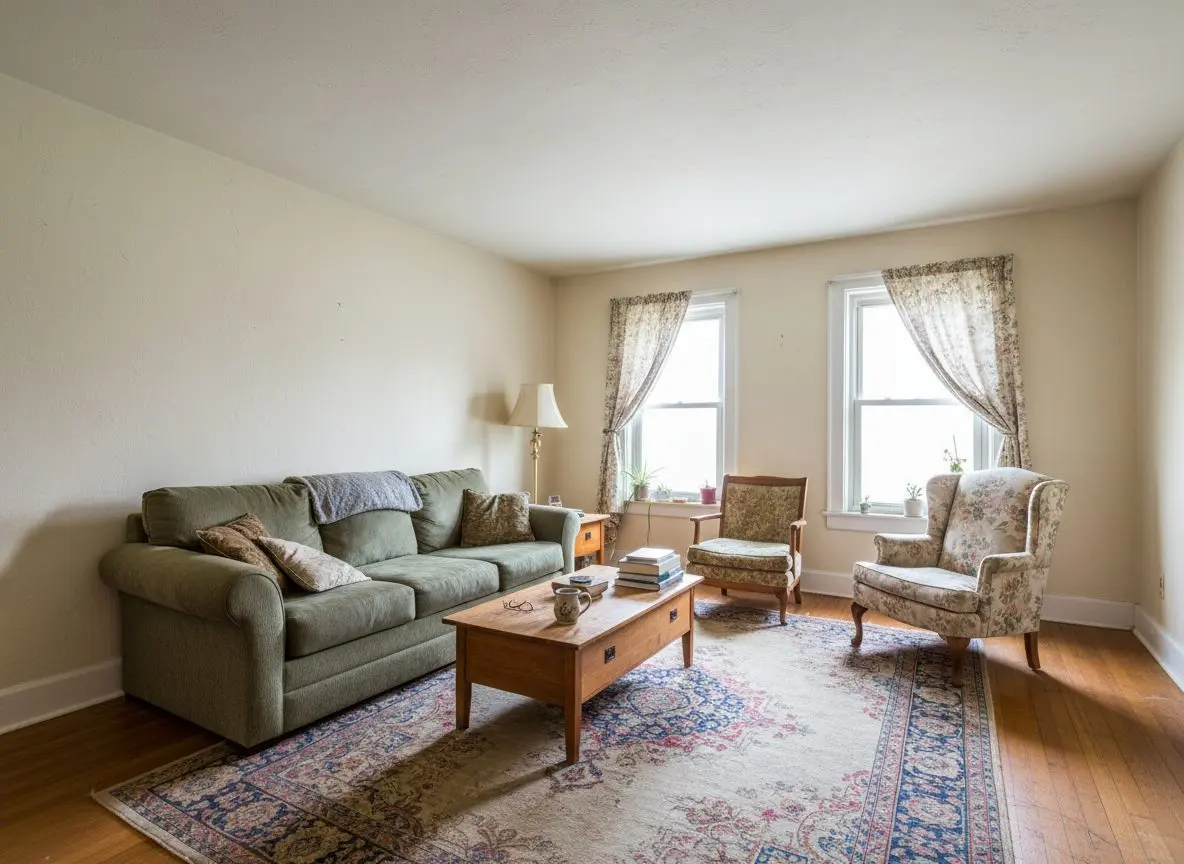
Plaster underneath, painted-over patterns and Hartford humidity
What is under the texture here is usually plaster, the pattern being matched has often been painted twice, and the knockdown window swings by minutes between August and February.
- Texture over plaster pulls water differently
- Old plaster is dense and usually painted, so it takes almost nothing from a wet spray, while a fresh compound patch beside it drinks. At one setting the same pass dries at two rates and the pattern changes at the join, so we seal the patch first.
- The pattern is rarely the original one
- Houses here have been redecorated by four or five owners, so what looks like one knockdown is often a lighter pattern sprayed over a heavier one and painted since. We match what is on the wall now, from a sample off it, not what it started as.
- Humidity moves the knockdown window
- A humid Connecticut August keeps a sprayed wall open twenty minutes, and a heated house in February closes it inside five. The blade goes on when the wall is ready, not at a set time, so a crew stays in the room instead of spraying and going.
Matches in Newington, the West End and Glastonbury
Texture and finishing jobs in named towns, with the part that decided the result written under each one. A pattern is easy to photograph and hard to match, so the words are the useful half.
-
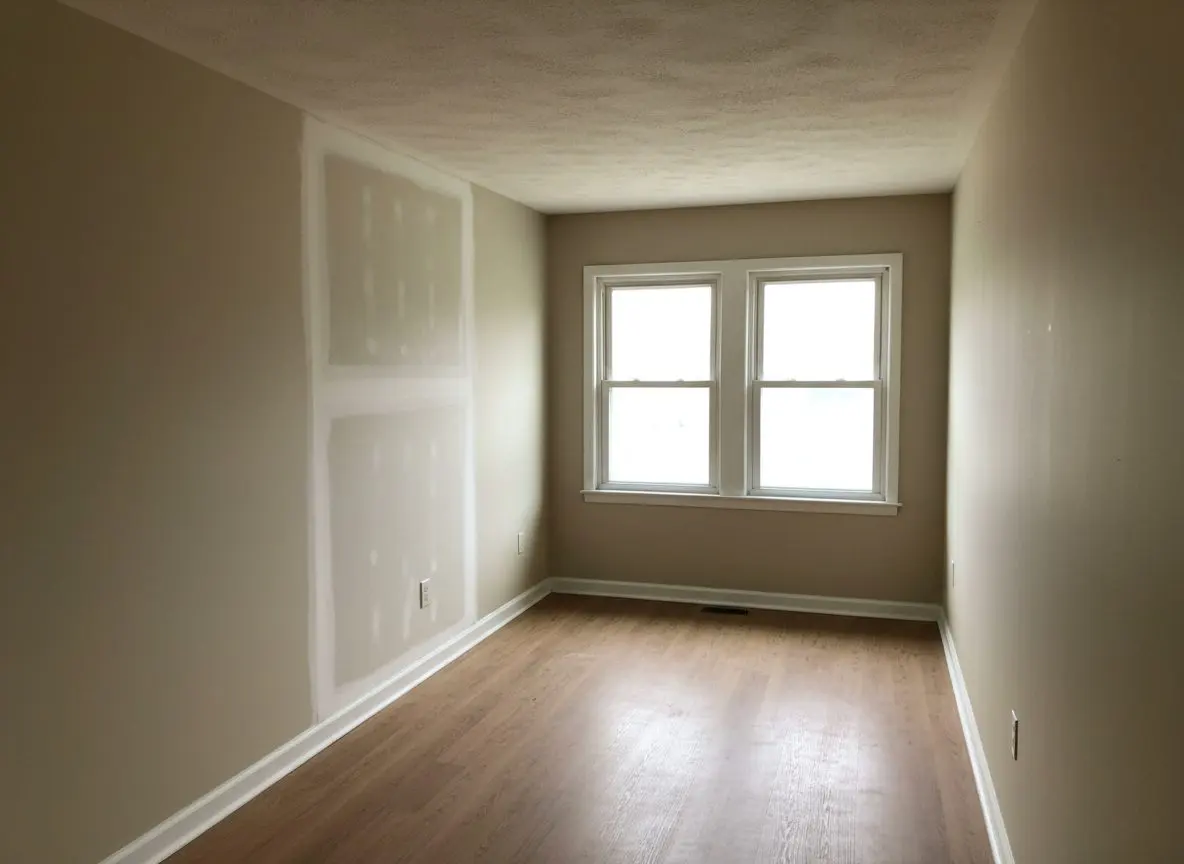
Knockdown matched over a repair
Newington
A patch in a hallway sprayed three times before the sample matched the painted original. The finished work stopped at the corner rather than in open wall.
-
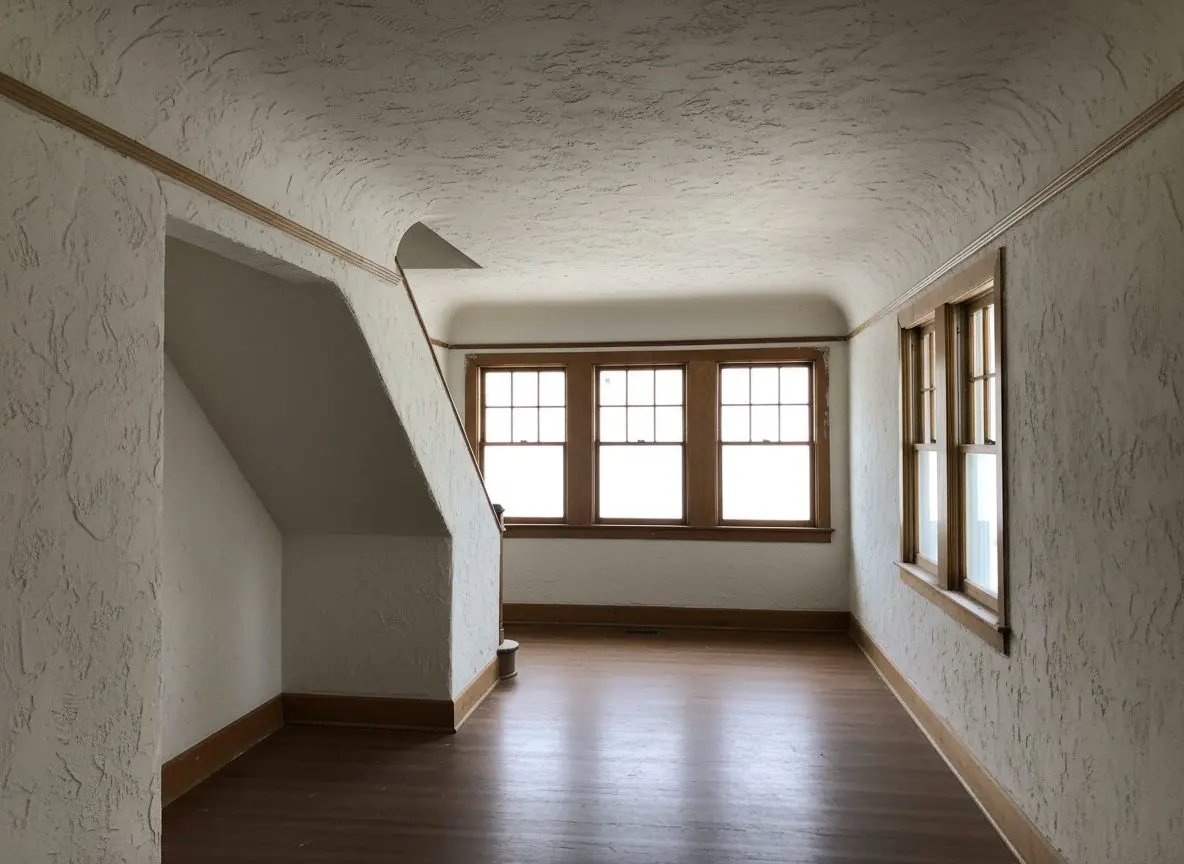
Skip trowel through a 1920s hall
West End
Applied by hand over lath and plaster, worked around an original picture rail and a curved stair soffit that no gun would have reached cleanly.
-
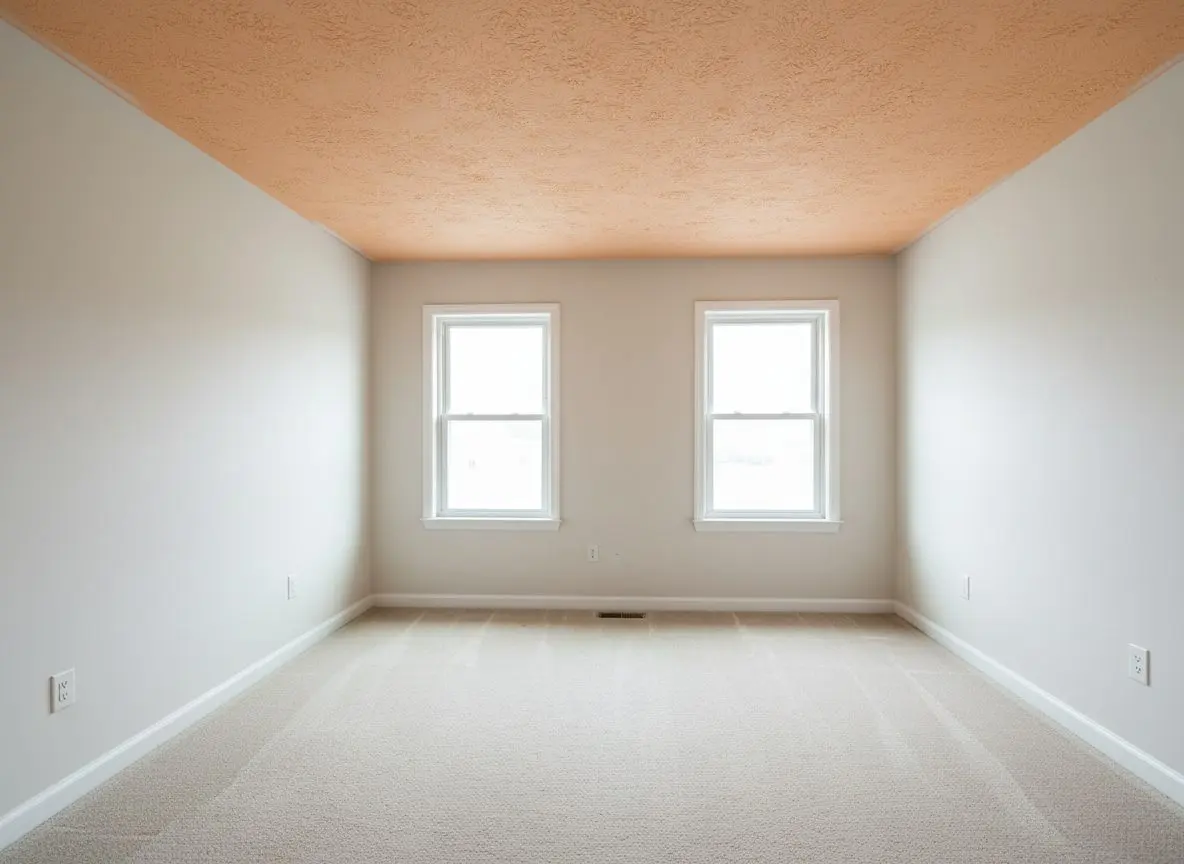
Popcorn off, orange peel on
East Hartford
Two bedroom ceilings tested for asbestos, scraped, skimmed flat and then sprayed to match the landing ceiling that was staying as it was.
-
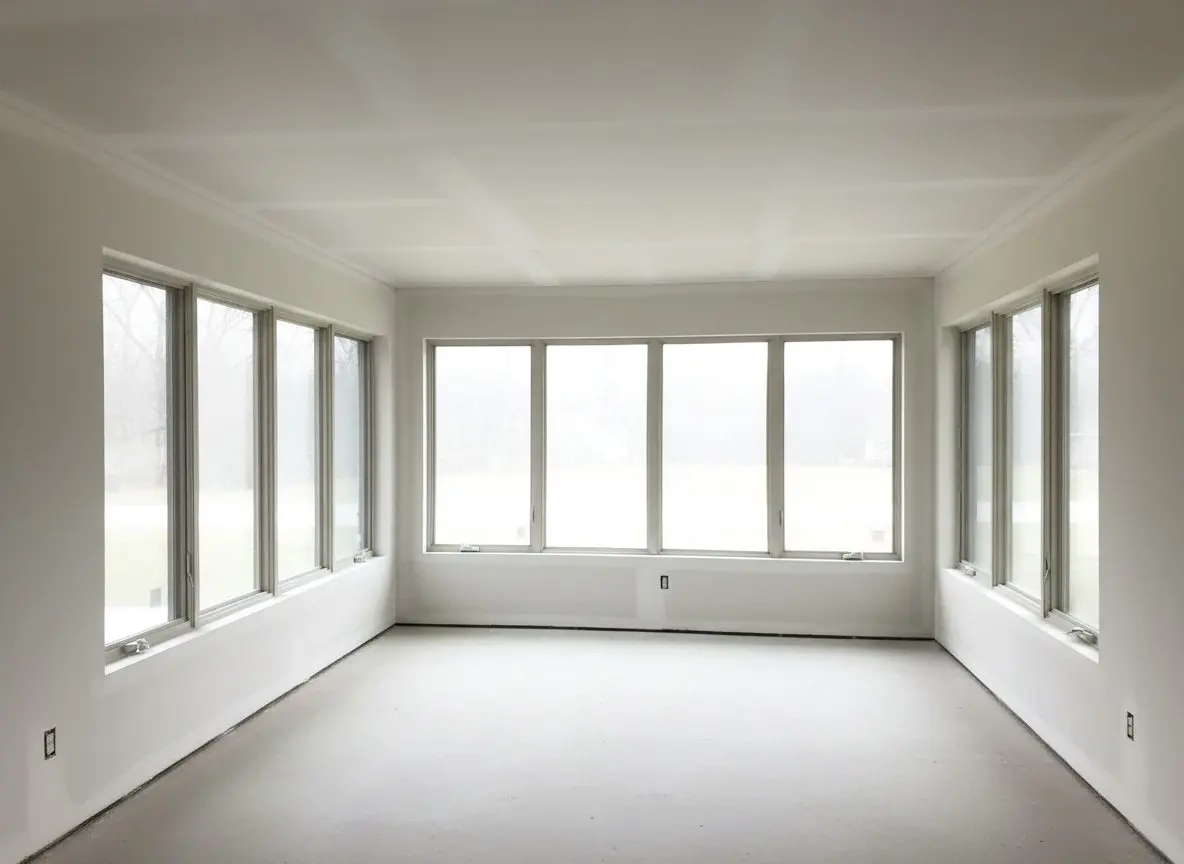
Level 5 in a room of glass
Glastonbury
A rear extension with windows down two sides. The whole room skimmed and sanded flat so the morning sun had no joint left to pick out of the paint.
-
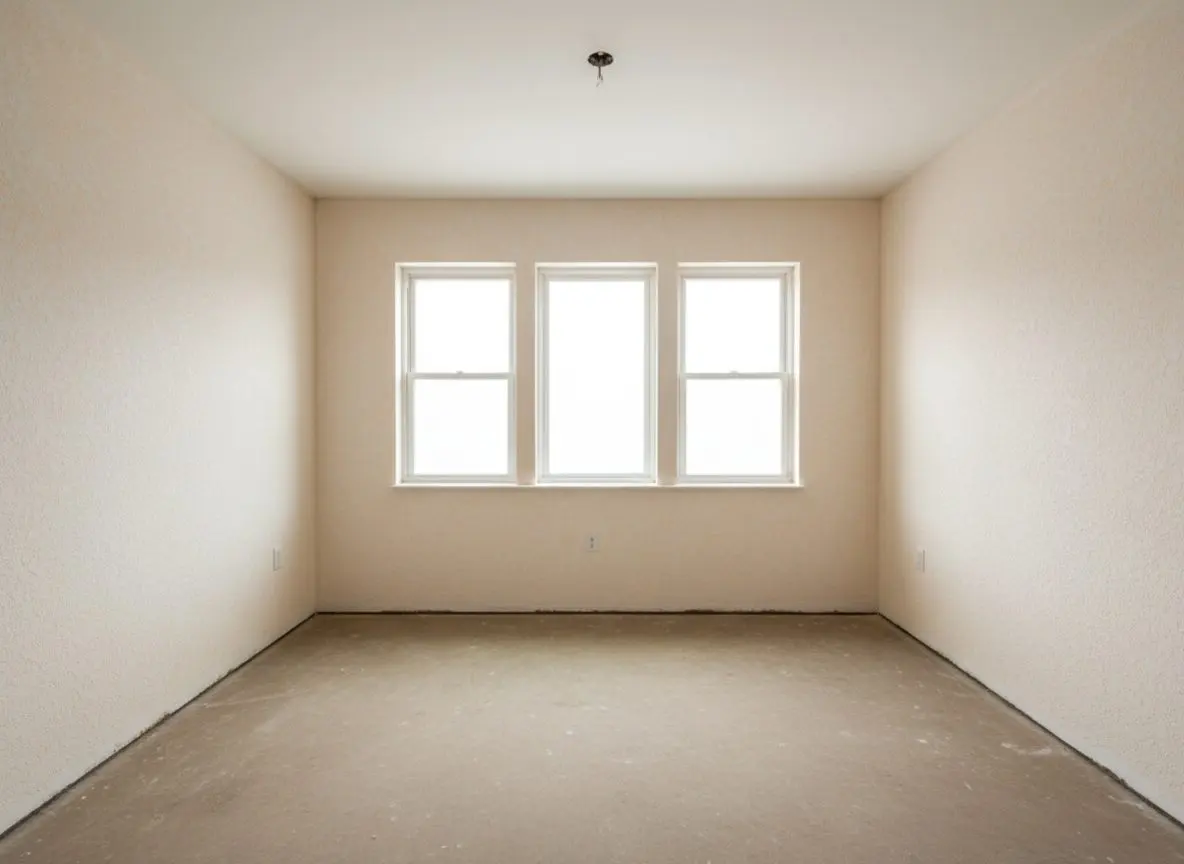
Eight units brought to one pattern
Behind the Rocks
An owner standardized on light orange peel across a whole building, so every future repair is one mix and one tip instead of eight separate guesses.
-
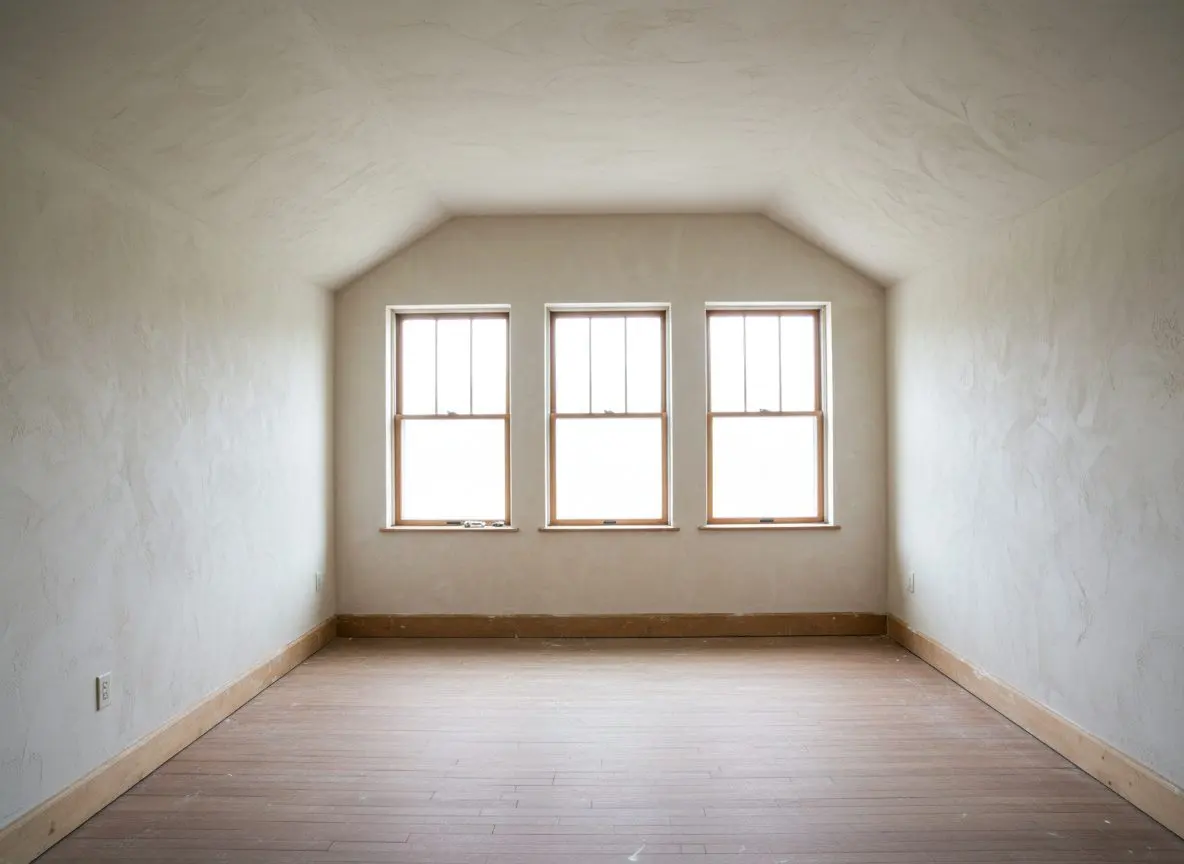
Hand trowel over old plaster
Simsbury
The owner wanted the room to keep its age, so the finish was floated on by hand rather than sprayed and left slightly uneven on purpose.
What people said when they could not find the new work
-
Rated 5 out of 5
Second floor turned around between tenants in three days, patched, skimmed and primed. The stair stayed clear the whole time.
Kevin R. Frog Hollow Drywall Repair -
Rated 5 out of 5
A pipe let go over the kitchen in March and half the ceiling came down. They stripped it back, then made us wait a week for the framing to dry before boarding. Glad now they did not just cover it.
Angela P. Bloomfield Water Damage Repair -
Rated 5 out of 5
Addition was framed and left for us to sort out. They shimmed the studs straight before ordering a single sheet, and the long wall with the afternoon sun on it does not show a joint anywhere.
Tom D. Glastonbury Drywall Installation
If you would rather see the work than read about it, ask and we will point you at a finished job near you.
Get a free quoteFAQs
Frequently asked questions
Questions people ask about matching a texture
Can you match a texture that has been painted over?
Yes, and that is most of what we match. Paint fills the pattern slightly and takes the edge off it, so a match sprayed to look like the bare original comes out sharper than what is on your wall. We spray the sample, prime it and look at it painted before agreeing that it is right.
Can you tell what texture I have from a photo?
Usually to the family, not to the setting. A photograph taken with the light running across the wall will tell us knockdown from orange peel from skip trowel, which is enough to talk about on the phone. How coarse it is and how hard it was knocked still needs somebody in the room.
Do you spray a test board first?
Always, and at the house rather than back at the yard. The board is sprayed with the mix and the tip we intend to use, left to dry, then held against your wall in daylight and under your own lamps. It costs an hour and it is the difference between a match and a patch visible from the door.
How close does a match actually get?
Close enough that you will not find it from a few feet away in ordinary light, which is the honest claim. With a nose against the wall in raking sun, somebody who knows where to look may still pick the edge of the new work, which is why we carry a pattern to a corner wherever the wall allows.
Can you take a textured wall back to smooth?
Yes. Heavy texture is scraped or knocked back, then the whole surface is skimmed in two coats and sanded flat. It is a bigger job than it sounds, because whatever the texture was covering, a wavy wall or an old repair, is what the skim then has to correct.
What is a Level 5 finish, and do I need it?
Level 5 is a thin skim of compound over the whole surface after taping, so the joints and the board face take paint identically. You need it where light rakes along a wall from a big window or a run of downlights, or under a dark or gloss color. Under ordinary paint it is money spent for nothing.
How long before new texture can be painted?
A day in a normally heated room, two in a basement or in wet weather. Texture is thicker in the pattern than a taped joint, so it holds water for longer than it looks like it should, and paint rolled over damp compound flashes and shows up later as a dull band across the wall.
How much masking is there if you spray?
The whole room. Floors, trim, windows, doorways, radiators and anything that cannot be carried out get covered and taped before the gun is filled, and the doorway gets zipped shut. That is most of the first morning, and it is why spraying one small area is rarely the cheap option.
Is the popcorn on my ceiling asbestos?
It might be, and in a house textured before 1980 we test rather than guess. A sample goes to a lab and comes back within a few days. If it is positive, removal is licensed work and not ours, and covering the ceiling over instead is often the better route in any case.
Can you spray texture straight over wallpaper?
No. Wet compound soaks the paper, the paste behind it lets go and the whole thing blisters within weeks, whatever the label on the roll claimed. The paper comes off, the paste is washed off with it, then the wall is skimmed and primed and the texture goes onto that.
Does texture cost more than a flat finish?
For a whole room, no. Texture hides more, so the surface underneath does not need taking to the same standard, and a sprayed pattern goes on far faster than a full skim. For one small area it is the other way round, because the masking and the set up are the same whether it is a patch or a room.
Will new texture crack or come off later?
Not where what is under it is sound and sealed. Texture fails when it is sprayed onto dust, onto gloss paint or onto unprimed patchwork, or when it is laid on so thick that it dries hollow. Over primed, sound board or plaster at a normal build it moves with the wall and lasts as long as the paint.
Hartford Drywall Pros
Small repairs start inside two weeks, no matter how far out the big jobs are booked.
Hartford Drywall Pros hangs, tapes, finishes and repairs walls and ceilings across Hartford, in houses that range from new construction to pre-1940 plaster over lath. Four crews finish about two hundred and forty jobs a year, and a small repair usually starts inside two weeks even while a whole floor is booked further out. Trading here since 2007.
What nineteen years in Hartford's oldest houses taught us
- Nineteen years working pre-1940 lath and plaster, trading since 2007
- A screw goes into the wall before the quote, so we know board from plaster first
- Small repairs start inside two weeks, even when the big jobs are booked further out
- Nor'easters and ice dams are priced into how we protect a ceiling before we open it
- We prime what we finish, so you can actually see the work before we leave
If a wall has gone soft after a storm, an old ceiling needs opening up, or a room needs drywall from scratch, call (860) 847-8709 and somebody will come and look at it. We will tell you on that visit whether it is board or lath and plaster behind the surface, and the written quote follows the visit, never before it.
Give us a call
office@hartforddrywallpros.com
Send us a message
100 Pearl St, 14th Floor, Hartford, CT, 06103
Where to find us